
Norman was born to write, but doesn’t know his destiny is written in his DNA, inherited from generations of earlier Normans who yearned to put pen to paper – once those items had been invented!
Yet with nothing to show for all his literary endeavours and struggling to pay the rent, he tells himself there must be easier ways of making a living. It’s only when Norman discovers his descent from a long line of wordsmiths who’d experienced many of the same setbacks as himself yet had found the resolve to keep on going, that he wants to know: ‘What was their secret?’
#TheWritersGuideToObscurity @SteinbergStory @Zooloo’s Book Tours @zooloo2008 #ZooloosBookTours #blogtour
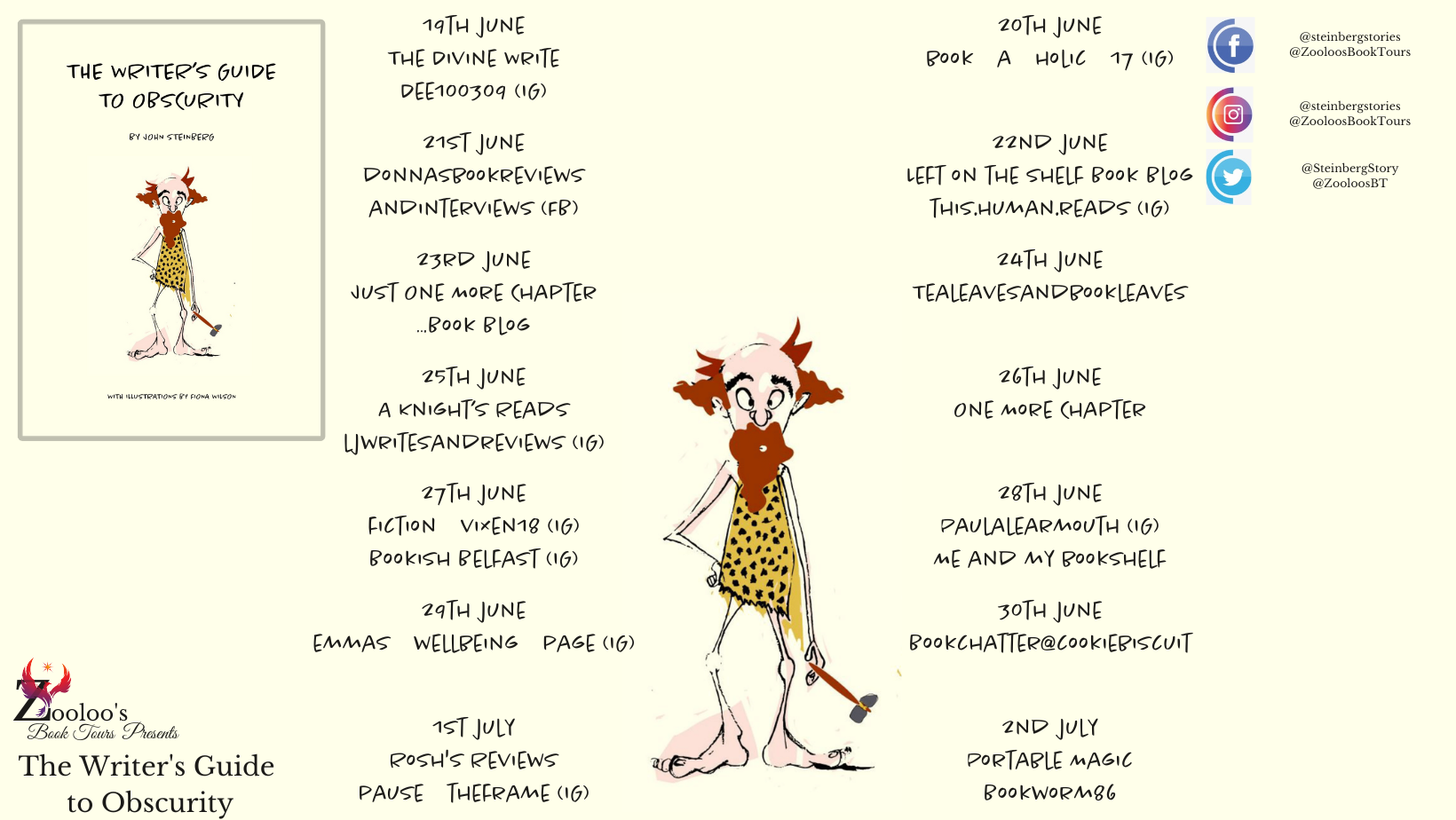
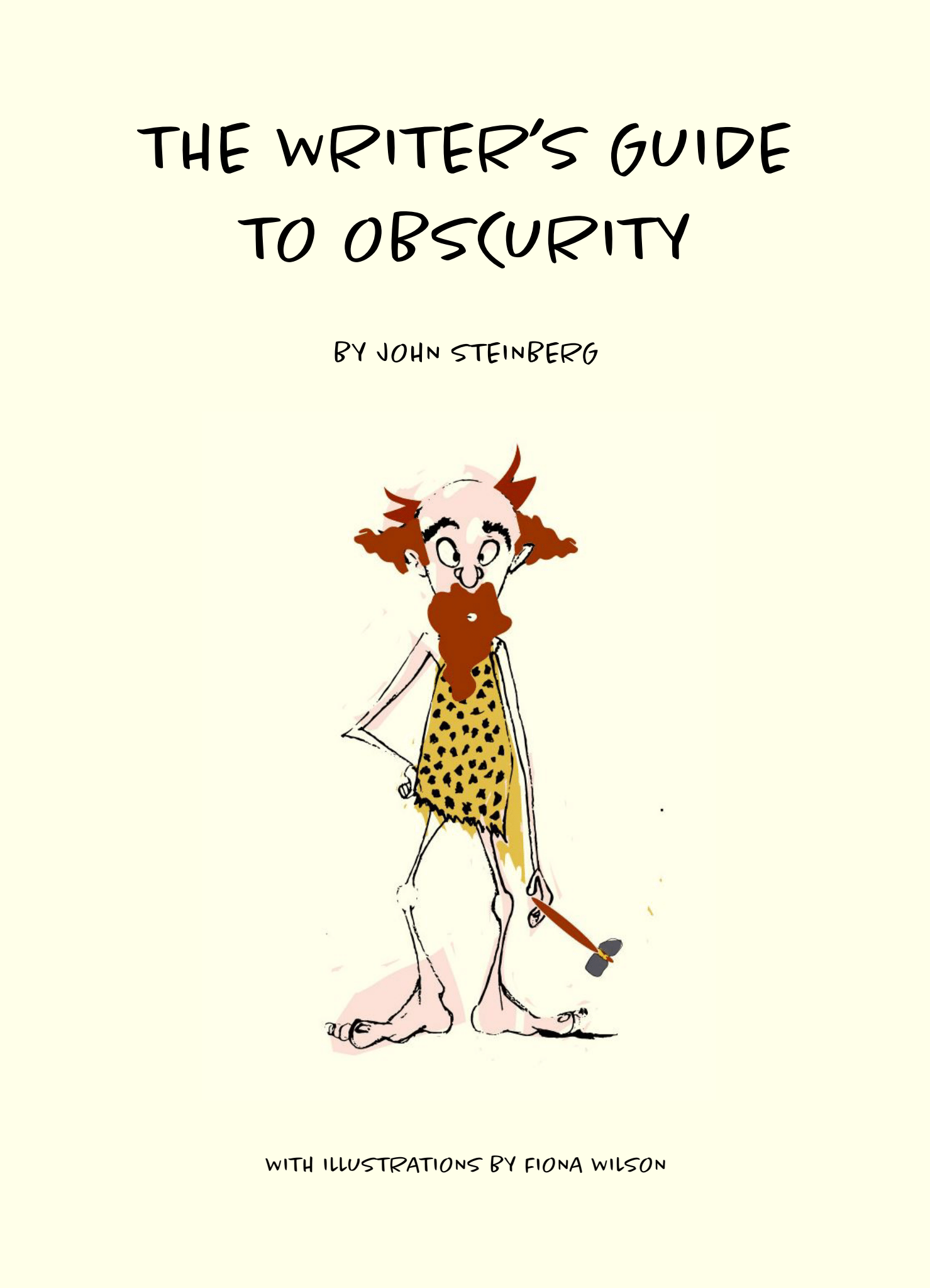
The Writer’s Guide to Obscurity is an illustrated record of Norman’s research into his vast family tree, sharing with us his predecessors’ trials, triumphs and absolute catastrophes through the centuries, before bringing us back to Norman today – and the twist in his own tale.
My Review
A very short book which follows different ‘Normans’ through the ages, from seeking materials and making your own ink, to the invention of the printing press. A ‘Norman’ is always there, but rather than publishing his own work, he is helping someone else, even Shakespeare at one point.
We start with Ancient Norman in 4500 BCE. Norman needed something to write on, which meant parchment, but he ‘immediately found himself out of his comfort zone when faced with an animal carcass’. I’m with you on that one Norm. He required his neighbours to lend a hand.
In Ancient Greece 700 BCE, Norman had to go though the same ‘stringent, character-building physical regime that was part and parcel of the development of the ordinary Athenian male’. Those who like Norman were ‘built more for comfort than for speed’ had to find ways to survive. But it wasn’t all bad news. Norman was able to perform his comedies and poetry, which were very popular, but he needed a patron so he could pay for food and lodgings.
In Ancient Rome c.700 BCE, Roman Norman was involved in ‘writing statements and other commissions for paying clients’. Basically, Norman was being paid to improve on his patrons’ writing, but he had to give up any rights to his work. So no progress yet as an author in his own right.
Dark-Aged Norman 410 – 1066 CE. Now we are heading into more modern times. Norman had to give up Latin and learn Anglo-Saxon, but this was all for the good as he liked the stories that went with it, such as the tales of Beowulf.
Norman Norman 1066 CE and we see our intrepid writer assisting on the Doomsday Book, but much of his income came from writing boring religious scripts rather than narrative epics and romantic literature.
In the Middle-Ages, 1066 to c.1600, sponsors were rare but Norman being literate was always able to find work as a clerk. And luckily for Norman, he retained all the education of his forbears, which he was able to put to good use. With his knowledge, he could have written a play and put his money into producing it. Simpler though to chuck in his lot with a playwright and actor called – you guessed it – Will Shakespeare.
Early Modern Norman 1600-1900 and things are changing rapidly. Along came the printing press. Unfortunately, this new-fangled contraption saw the end for those employed in the laborious production of hand-written manuscripts, so it was ‘adapt or get laid off’. And never let it be said that Norman wasn’t adaptable! Literature was becoming available to the masses and more advanced presses meant a wider range of books was being published.
Finally, Modern-Day Norman from the 19th century to today and education for everyone means literacy was at an ‘all-time high’. Pen and paper had been replaced by the typewriter, and eventually word processing and computers, but still Norman hadn’t had any success with his own writing.
But things didn’t change until Norman found himself able to share his experiences with his writer community, and the rest, as they say, is history.
This was a lot of fun – I sat and read it in one go – it’s witty, cynical, has hilarious illustrations, and gives us a historical insight into the development of writing and being an author. In fact I read it again in order to pen this review.
Many thanks to @zooloo2008 for inviting me to be part of this blog tour.
About the Author
Born and raised in North London in 1952, John still lives in the city with his wife and three children. Privately educated, John left school after ‘A’ levels and completed a business diploma in what is now the University of Westminster, before entering banking.
He started training as an accountant but did not complete the course, choosing a position in his family’s furniture manufacturing business instead. John started his own mergers and acquisitions business in 1987, which he ran for almost 20 years before quitting to become a full time writer in 2007.
John has co-written and produced comedies for the stage and has created a series of books for children. “Previously, I had only been interested in comedy and finally started to write down the things I said or thought of. That led me to co-write and produce a play, In the Balance, and then W for Banker – which appeared at the New End Theatre, Hampstead. It was then I decided to quit the world of business in favour of writing full-time, and move toward more serious subjects. My first novel has taken two years to write and is the first in a series of books I am calling the ‘Steinberg Stories’.”

Links
Facebook: https://www.facebook.com/steinbergstories/
Instagram: https://www.instagram.com/steinbergstories/
Twitter: https://twitter.com/SteinbergStory/
Website: https://steinbergstories.com/
Goodreads – https://www.goodreads.com/book/show/124864581-the-writer-s-guide-
to-obscurity
Buy Links – https://geni.us/riLMlA7


 Bookchatter@Cookiebiscuit
Thank you so much for supporting the tour and for sharing this lovely review x