
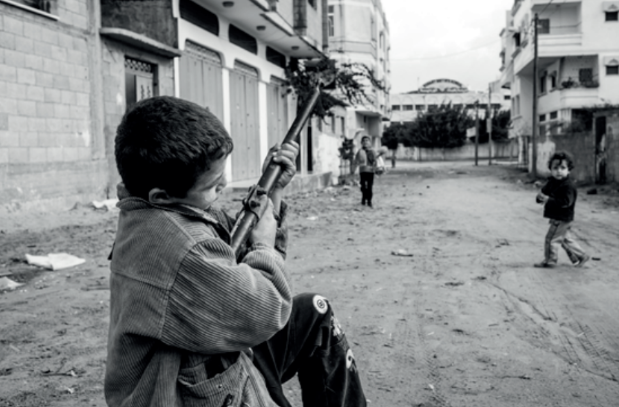
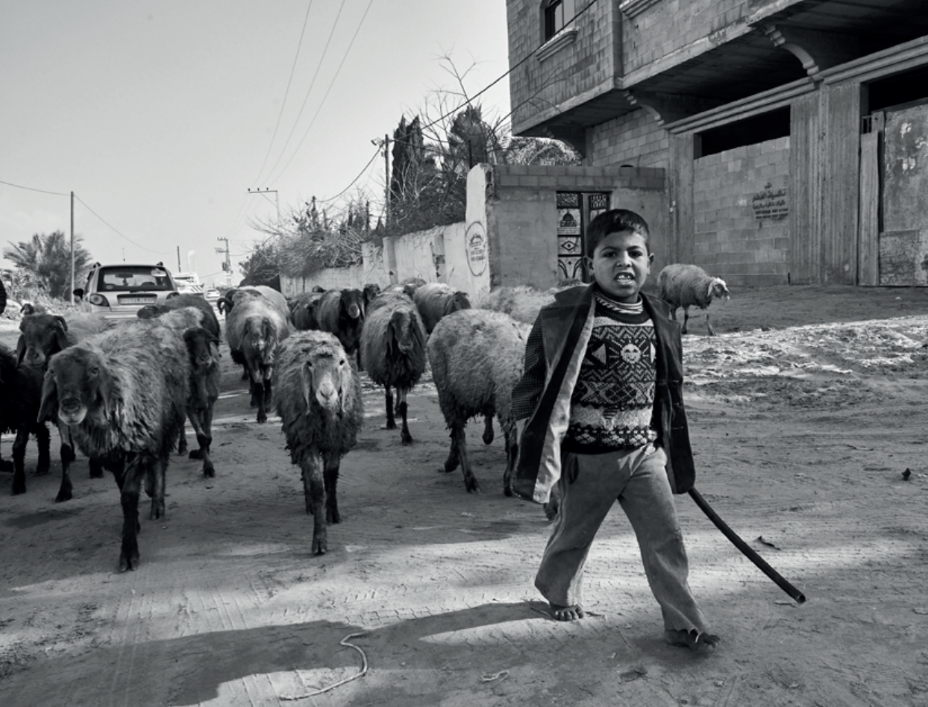
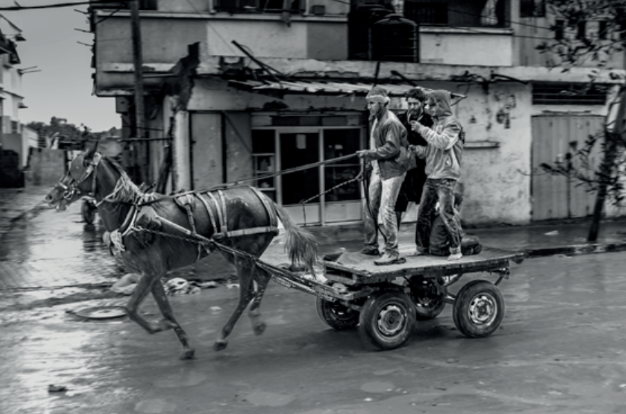
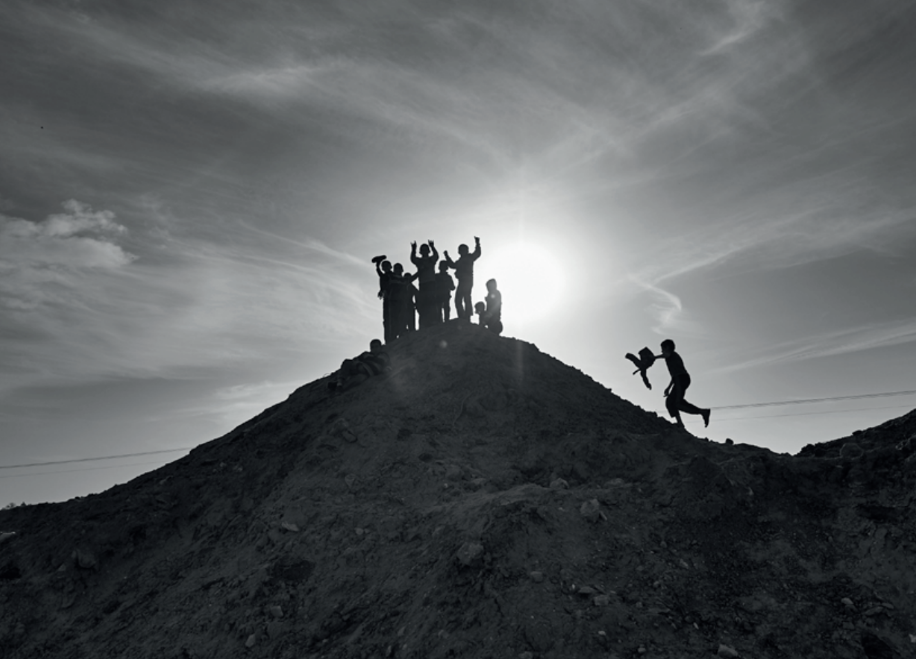
The photographs in this book were taken in February 2010, a year after the Israeli action ‘Operation Cast Lead’.
Published by Hood Hood Books
Format: Hardcover
Retail price: 40 GBP
Buy Link
www.amazon.co.uk
PR contact
gracepilkingtonpublicity@gmail.com
Forward by Mr Khaled Dawas
Chairman, Al Quds Foundation for Medical Schools in Palestine
Director of GI Surgery, Honorary Associate Professor,
University College London Hospitals
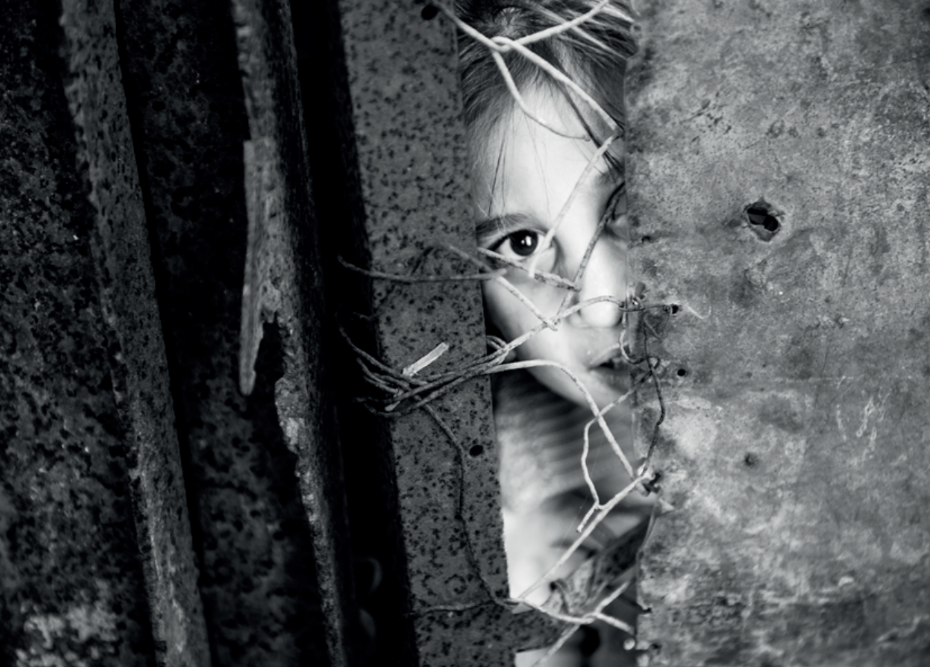
“Ten Days in Gaza is a timeless project, a beautiful album of photographs taken in 2010 by Giuseppe Aquili, Anthony Dawton and Jim McFarlane, reflecting the harshness of contemporary Gazan reality. It mirrors recurrent displacements and bombardments and decades of silence and neglect. Destruction is all around, and sadness is etched on the faces of many. Yet, beauty and hope are everywhere. Read beyond those anguished expressions and you will sense the resourcefulness, determination and resilience of the Palestinian people. Gaza’s wealth of history and culture is often forgotten. The strip of land that straddles the Afro-Eurasian crossroads has long been a melting pot as numerous conquerors and civilisations walked through its fertile land and anchored at its shores. It is a 4000-year-old city on the shore of the Mediterranean, created by the Canaanites and once part of Ancient Egypt, Babylon, Ancient Greece and the Persian and Roman Empires. Alexander the Great besieged it; Amr ibn al-’As conquered it for the Muslim Arabs; Napoleon overran it; the Ottomans relinquished it to the rising British tide in the First World War.
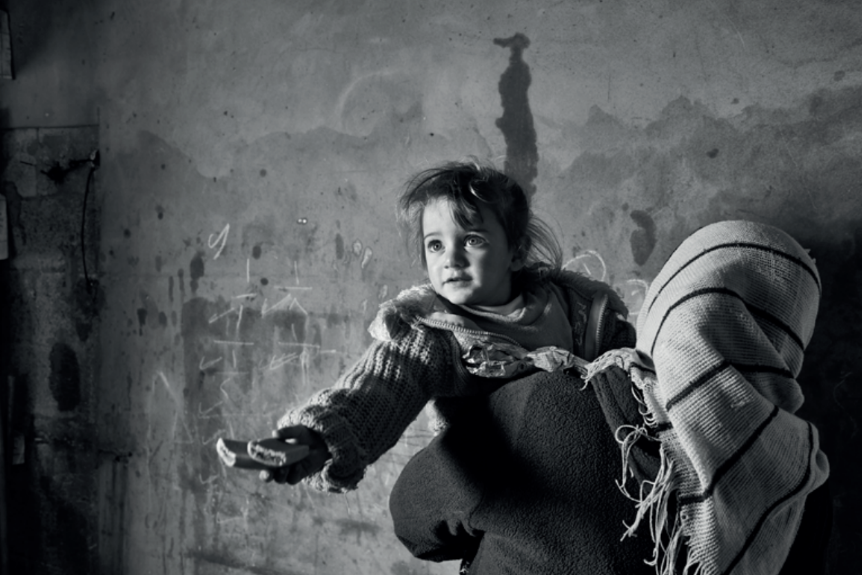
“There are historic places of worship for Muslims, Christians and Jews alike, who have prayed at the Omari Mosque, the Church of St Porphyrius and the ancient synagogue in Gaza over the centuries. These striking photos of children’s faces reveal genes from the Levant, Africa, Europe and the tribes of Arabia. Today, Gazan children, the heirs of these civilisations and empires, are tragically trapped by concrete and water under a sky that, time and time again, rains explosives.
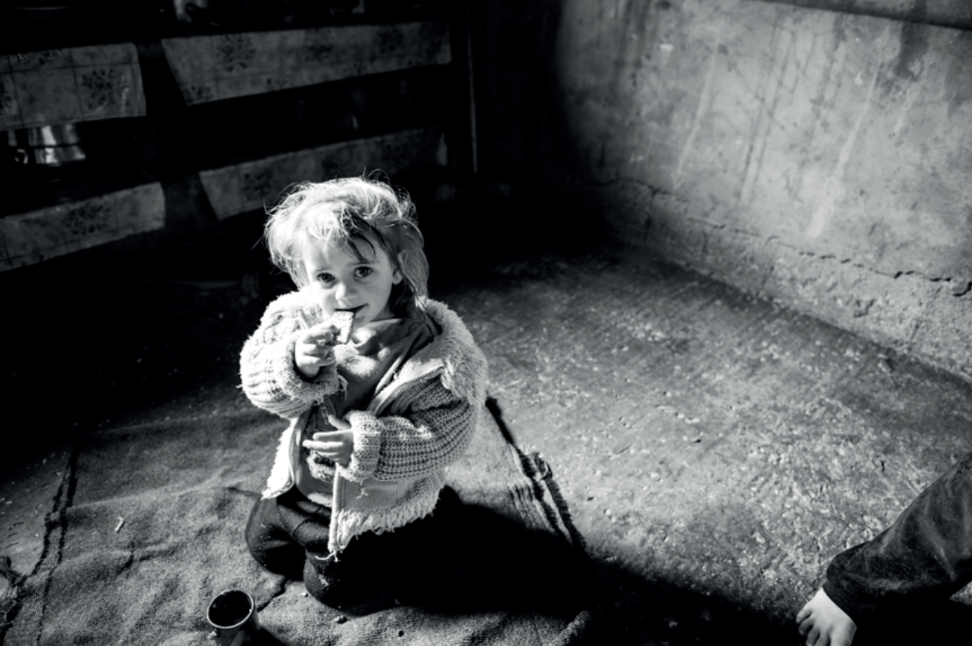
“Gaza’s history is not that of poverty and grey concrete breeze blocks but that of a thriving coastal city in a fertile plain which grew olives, citrus fruits and flowers, to match the best. The stunning city panels in the beautiful large Byzantine mosaic floor, discovered in Umm al-Rasas in Jordan and dated to 785, show Gaza amongst the celebrated cities in the region including Alexandria, Jerusalem, Neapolis (Nablus), Caesarea and Philadelphia (Amman). The streams at the foothills of Al-Khalil (Hebron) in the West Bank and the springs in the Naqab (Negev) Hills are the tributaries of the Wadi Gaza river.
“In 1948, tens of thousands of Palestinian families displaced by the creation of Israel walked south along the coast and took refuge in the Gaza Strip. Families of the farmers (fallaheen), landowners, fisherman (sayyadeen), civil administrators (idariyeen) and other professionals, suddenly made destitute during the Nakba, walked from Yafa, Al-Majdal and Asqalan and many other towns and villages. The locals embraced them just north of Gaza City: suddenly another ingredient was added to Gaza’s demographic mix.
“Today, the Wadi Gaza river flows no more, diverted by Israel. But today’s Gazans – including descendants of those 1948 refugees from historic Palestine – are capable engineers, teachers, nurses and doctors aspiring to compete as self-made professionals. As proud as they are ambitious, they have already spread across the world, plying their trades. The healthcare workers who returned to stay in Gaza have become globally famous in recent months for their remarkable resourcefulness, steadfastness, and extraordinary courage in the face of unfathomable adversity.
“I am delighted to be Chairman of FQMS, Al Quds Foundation for Medical Schools in Palestine, which is a British-based charity furthering medical education for Palestine. FQMS was established in 1997 to support the then fledgling medical school at Al-Quds University on the outskirts of Jerusalem, and later extended its work to the medical schools in Gaza and Nablus. The most talented school leavers want to become healers and serve their people. It is the mission of FQMS to help make that possible and it makes us proud that medical graduates of all Palestinian medical schools have shown their calibre against international standards.
“We at FQMS are proud of being part of this inspiring project. It is but a small part of the story of an ancient land, short-changed by its contemporary fate. We wish to cultivate the pride and ambition that the photographers have so skilfully and compassionately captured in this album, against a merciless setting.
“Ten days in Gaza is hardly long enough but cherish your stay.”

My Thoughts
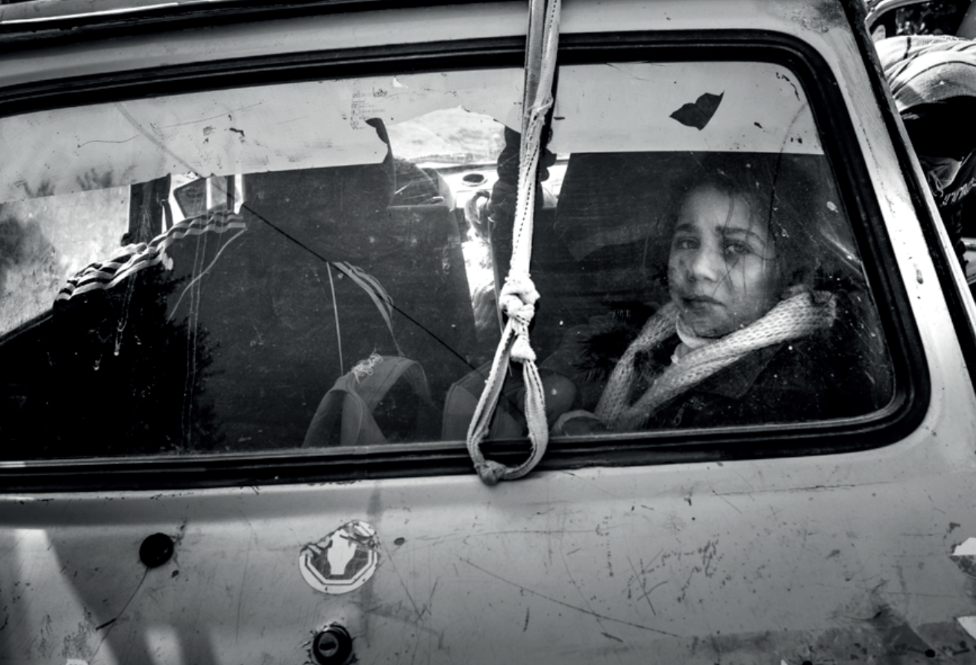
I loved NotLondon and Edge Of Hope. The photos are so powerful and Ten Days in Gaza is no different. The photographers manage to capture the soul of the place, mostly through the eyes of the children. My favourite is probably the one seen through the rear window of a car, with a piece of fabric hanging down that resembles a noose.
The photographs “mirror recurrent displacements and bombardments and decades of silence and neglect. Destruction is all around, and sadness is etched on the faces of many. Yet, beauty and hope are everywhere.” They show how the children can rise above adversity.
But fourteen years later and nothing has changed. ‘As of 29 February, the Gaza Health Ministry reports that at least 30,000 Palestinians (including over 10,000 minors) have been killed, over 70,000 injured, and 10,000 are missing under rubble, totaling over 110,000 casualties since the war began, which is about 5% of Gaza’s 2.3 million population.’
As ever, children are the innocent victims of a war which they don’t understand. But then, neither do I, or millions like me. There’s no excuse.
Many thanks to Grace Pilkington Publicity @GracePublicity for inviting me to give an unbiased review of Ten Days in Gaza.
About the people involved in the project
Dia Al-Azzawi
Dia al-Azzawi was born in 1939 and achieved a degree in archaeology at Baghdad University (1958–62), at the same time as a diploma from the Institute of Fine Arts in Baghdad (1959–64). Azzawi worked as an archaeologist and museum curator, and also exhibited his work publicly from 1964 onwards, becoming a central figure in the development of modernist art in the Arab world. He was a member of several art movements and wrote the iconic Towards a New Vision manifesto in 1969; as secretary of the Iraqi Artists’ Society, he established the pioneering al-Wasiti Festival in 1972.
In 1976, Azzawi moved to London and continued to forge ties with artists across the Arab world, curating numerous exhibitions at the Iraqi Cultural Centre that travelled to the region. His work became deeply influenced by world politics and especially injustice in the Arab World, publicising and supporting the Palestinian cause and that of the Iraqi people. Long influenced by storytelling, particularly from Iraq, Azzawi uses Ancient Mesopotamian and ethnographic imagery, often intertwined with text from modern Arabic literature. Since 1991, he has predominantly painted Iraq in black-and-white, as opposed to his usual bright colours, in a series called Land of Darkness.
Although primarily known as a painter and draughtsman, Azzawi works in a huge variety of media, ranging from graphic design to monumental sculpture and both two and three dimensional printing. Approximately a quarter of his artist’s books were the focus of Painting Poetry, a recent solo exhibition at the Ashmolean Museum, Oxford (December 2022–June 2023).
Giuseppe Aquili
Giuseppe Aquili was born in 1974 in Ancona, Italy. He studied photography at the Experimental Design Centre in Ancona where he was influenced by the Marché photographer Mario Giacomelli and Pep Bonet as well as the artists Egon Schiele and Alberto Giacometti. He worked in Italy for several years before coming to England in 1999 where he has involved in photographic projects in Oman, Awwlbania and Nigeria as well as in the UK. Photographs from a UNICEF and Al Madad Foundation project in Niger were selected to show at the 2009 Sony World Photographic Awards, in Cannes, as well as on a UN calendar later that year.
In 2010 Aquili went to Gaza for Save the Children to photograph children who had been affected by conflict. Images from the project formed part of The Children of Gaza Exhibition in 2011 and now appear in this book. Since then, Aquili has returned to his home country to pursue a career outside photography.
Anthony Dawton and Jim McFarlane
Anthony Dawton is an award winning commercial photographer. His work has been published in The Guardian, The Independent and he was the house photographer for the iconic arts magazine Funoon Arabia. Dawton was one of six photographers to be featured in the Australian CCP exhibition that toured South East Asia in 2010. He has been a contributing photographer to the Silent Witnesses book series: Kashmir’s Children, The Silent Witnesses of the Earthquake and Desert Faces, The Silent Witnesses of the Niger Children.
In September 2021 his book, NotLondon was published (click on link for more information), the result of nearly two years spent talking to and photographing the homeless on the streets of London. Dawton has also lectured in London on photography.
Jim McFarlane is an Australian based photographer who has worked commercially for over 25 years. His expertise covers advertising and a wide range of subjects including food, dance and people. The Australian Ballet has used McFarlane extensively and he has been awarded by The Melbourne Art Director’s Club and has received the Oriental Fine Print award. McFarlane’s work is also included in the collection of the Australian National Library. McFarlane has taught photography at Victorian College of the Arts, Melbourne and Deakin University, Geelong.
Dawton and McFarlane have worked together for many years, often collaborating on projects highlighting humanitarian crises arising from conflict or natural disaster. In 2008 they (along with Guiseppe Aquili) were invited to Niger by the Al Madad Foundation and UNICEF to document the effects of severe drought.
Photographs from this project were selected to show at the 2009 Sony World Photographic Awards in Cannes. In 2010, the three photographers visited Gaza for Save the Children and photographs from that project formed part of a touring exhibition in 2011 and which are now the subject of this book.
In 2013, Dawton and McFarlane entered what was then the largest refugee camp in the world: the camp in Zaatari, Jordan. The resulting photographs and film, the Hotel Zaatari Project, toured the Middle East and UK. In October 2014 the TMCP V.VC. Vorovsky factory in Tikhoretsk, Russia, invited Dawton and McFarlane to photograph their workers. An exhibition of the images opened at the TMCP factory in February 2015 and later transferred to Moscow.
More recent projects have included the photographing and filming of the Syrian refugee camps in the Bekka Valley, Lebanon and the Palestinian camps in Beirut.
In May 2022 Dawton and McFarlane photographed the flood-prone char islands in Bogra, Bangladesh and the Rohingya camp at Cox’s Bazar. An exhibition of their photographs from the Rohingya camp is currently touring and a book, Edge of Hope: The Rohingya Refugee Camp at Cox’s Bazar, has just been published. (Click on link for more information.)
Acknowledgements
We must acknowledge and thank those who inspired, helped, supported and made possible the The Ten Days in Gaza project from the start fourteen years ago. Ahmed Muhanna, our guide and Ziad, our driver. Saleh Judellea, the English student, photographer and unofficial guide. Sharif Sirhan, photographer and artist. Ousama, Save the Children’s point man in Gaza and Jochen Sokoly of the Virginia Commonwealth University in Qatar. Closer to home we are very grateful for the professional advice from Louisa Macmillan and Liz Holmes. Above all, we wish to thank Dia al Azzawi and Faiza Alireza Mayassar, whose support and kindness made this project possible in the first place.
The publisher wishes to warmly thank As’ad AbuKhalil, Lina Al-Nashef, Sawsan Asfari, Alexandra Breton, Khaled Dawas, Sami El-Haddad, Elvira Guttierrez, Tara Kelly, Grace Pilkington and Ian Watts.

 Bookchatter@Cookiebiscuit