
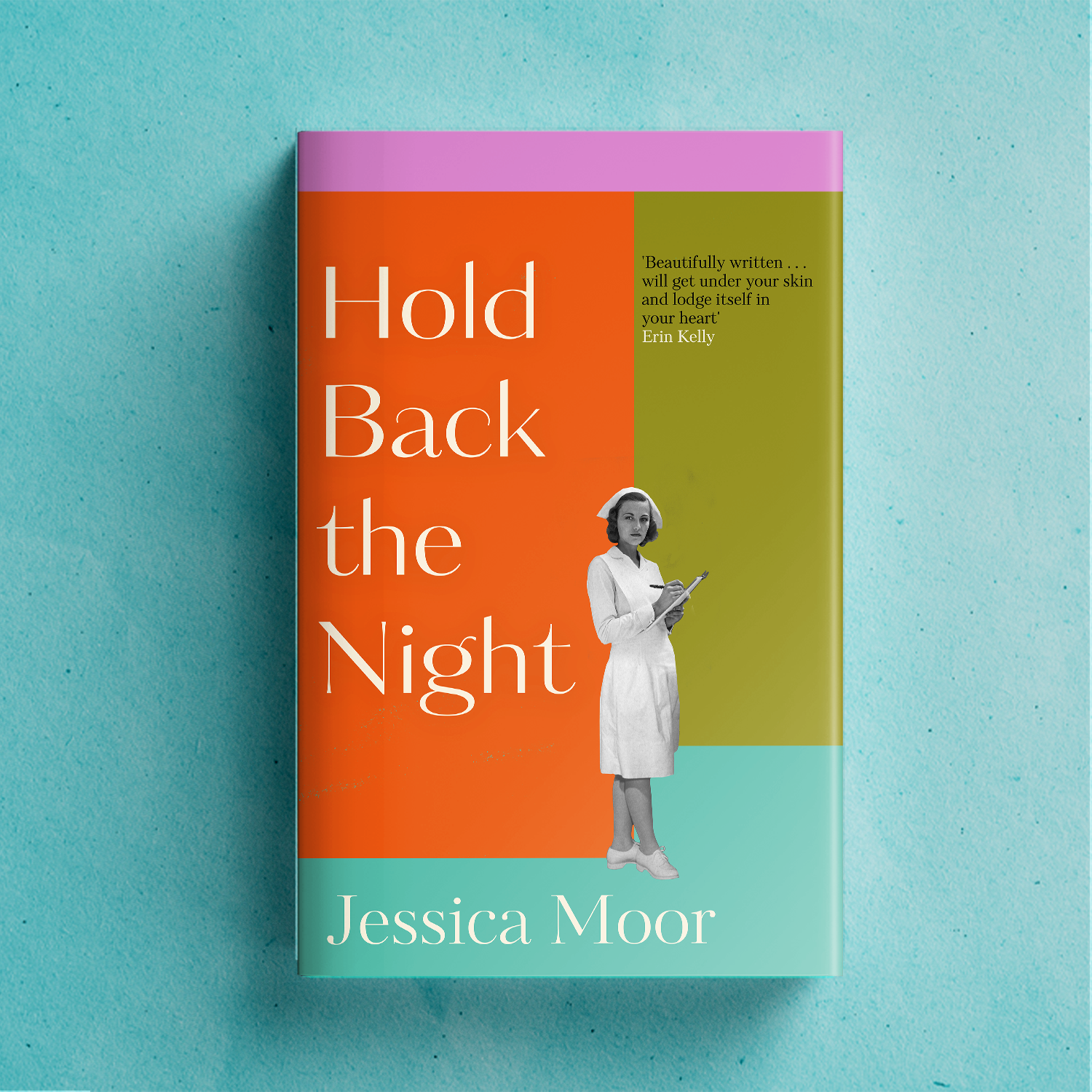
From the Observer debut novelist of the year, comes a blistering, heart-wrenching new novel of complicity and atonement, delving into one nurse’s experience of the little-known history of conversion therapy and the heart-breaking betrayal of the AIDS crisis.
March 2020. Annie is alone in her house as the world shuts down, only the ghosts of her memories for company. But then she receives a phone call which plunges her deeper into the past.
1959. Annie and Rita are student nurses at Fairlie Hall mental hospital. Working long, gruelling hours, they soon learn that the only way to appease their terrifying matron is to follow the rules unthinkingly. But what is happening in the hospital’s hidden side wards? And at what point does following the rules turn into complicity – and betrayal?
#HoldBackTheNight X/Twitter @jessicammoor @ZaffreBooks @Tr4cyF3nt0n
Instagram @ms_jessica_moor @manilla_press @thebookdealer #CompulsiveReaders #blogtour

1983. Annie is reeling from the loss of her husband and struggling to face raising her daughter alone. Following a chance encounter, she offers a sick young man a bed for the night, a good deed that soon leads to another. Before long, she finds herself entering a new life of service – her home a haven for those who are cruelly shunned. But can we ever really atone?
The powerful and captivating new novel from the celebrated author of Keeper and Young Women, Hold Back The Night is Jessica Moor’s most powerful and commercial book to date. A darkly compelling character-led novel, drawing on themes of complicity and betrayal.
My Review
There is a scene that takes place in 1959, where Annie and Ruth are asked to assist with a patient who is having electric therapy (or electric shock treatment as we know it today). Along with one of the interns they have to hold her down, while she is ‘shocked’. I had to stop reading. My mother had this treatment in the 50s. I never knew they had to be held down. She later had a leucotomy and this also occurs at Fairlee Hall, where the girls are training to be ‘mental nurses’.
In the side wards, patients are receiving treatment to make them ‘normal’. This, we discover later on, was a means of treating homosexuals with emetics and images of young men, all designed to deter them. The alternative was prison as it was still illegal to be actively gay in the UK until 1967. Alan Turing was chemically castrated in 1952 for homosexual acts, again as an alternative to prison.
As student nurses, Annie and Ruth have to do as they are told, but at what point do they question the rules and ask themselves if what they are doing is wrong. Are they complicit in something morally questionable? Many years ago I worked in a nursing home where dementia patients were forced to use the toilet with two HCAs holding them down and removing their clothing. I was very upset about it. Nowadays, it would be considered an assault.
In 1983, Annie is widowed and is a single mother to 13-year-old Rosie. One day she meets a young man named Robbie and his older friend Jim, and gives them a home when no-one else will, because this is the AIDs crisis, and homosexual men are shunned by society, people terrified of ‘catching’ it. And Annie needs the rent money from all her spare rooms. But soon her home becomes a haven for those dying of AIDs, and mostly they do. Sometimes their own parents have shunned them as well as society.
It’s 2020 and it’s the time of the pandemic. The country has been locked down. I usually hate stories that take place during the pandemic, but it’s necessary here to draw parallels with the AIDs crisis in the 80s. How they were dealt with and how much has changed.
Annie is now in her eighties. She lives alone. She talks to Rosie every day on the phone. Rosie thinks she should come to stay with her, that she is too vulnerable on her own. She also talks to Jim, who of all her lodgers, has survived AIDs, though he will always be HIV positive.
The book is not written in that order though. We start with a phone call in 2020, and then move around the timelines as the story progresses. It’s a very powerful novel that questions whether following the rules is always the right thing to do, even when we know it’s wrong, and can we atone by trying to right the wrongs. Even though the 1959 parts were hard for me to read, I really enjoyed the book (if that’s the right word).
Many thanks to @Tr4cyF3nt0n for inviting me to be part of the #CompulsiveReaders #blogtour and to NetGalley for an ARC.
About the Author
Jessica Moor grew up in south-west London and studied English at Cambridge before completing a Creative Writing MA at Manchester University where her dissertation was awarded the Creative Writing Prize for Fiction.
Prior to this she spent a year working in the violence against women and girls sector and this experience inspired her first novel, Keeper. Her second novel, Young Women, was published in 2022.
She was selected as one of the Guardian’s 10 best debut novelists of 2020, longlisted for the 2020 Desmond Elliot Prize and a Mystery Writers of America Award. She won the 2022 Nouvelle Voix du Polar. She lectures in Creative Writing.


 Bookchatter@Cookiebiscuit