
Anton Fischer, a curator at the prestigious Belvedere art museum, stands at the crossroads. War is on the horizon. Should he stay in Vienna under Germany’s oppressive regime, hide to avoid conscription in the Wehrmacht, or flee and join those opposed to Adolf Hitler?
Sacrificing his feelings for the woman he loves, Anton makes his way to England, and joins the Royal Air Force. Suffering injury during combat, Anton is seconded to the Monuments, Fine Art and Archives Programme. Its aim, to safeguard, and where possible, return to their rightful owners, their works of art expropriated by the Nazis.
#Cafe7Rheinhardt @PATRICKGOOCH6 @Zooloo’s Book Tours @zooloo2008 #ZooloosBookTours #blogtour
In the final stages of the Second World War he returns to Vienna, in search of the woman he loves. But nothing is simple. In following his heart, Anton is painfully aware that she may be beyond his reach.
My Review
It’s 1938 and Anton Fischer is a curator at the Belvedere Art Museum in Vienna. At this time, my Jewish mother and grandmother were living there, having moved from Bucharest some 12 years earlier. They knew it was time to get out, but unable to return to Romania, they fled to London where my grandfather was already settled, and were eventually evacuated to Cheltenham, my home town.
Why am I telling you this? Well, for me the book was personal. I know my family had to leave everything behind other than the few things they could carry, the nazis would have taken it all anyway. I never found out what they had abandoned and we never got any of it back.
The first part of the book tells the story of Anton’s attempts, with others, to hide works of art that Hitler considered to be ‘degenerate’. These included the paintings of Gustav Klimt, Egon Schiele and Oskar Kokoschka. Hitler was also planning to create the largest art collection in the world at Linz where he grew up, but little did he know that the likes of Heydrich and Göring were skimming Monets, Van Goghs and Vermeers off the top for their own personal collections. But Anton has a daring plan. Can he produce forgeries so good that they could replace the real thing?
Meeting at the Cafe 7Rheinhardt, Anton befriends Milo Stanton, an American war correspondent, who helps him in his mission, while reporting events back to his newspaper in the US.
Of course, in 1939, Hitler, having already taken Czechoslovakia and the Sudetenland, invaded Poland and we officially declared war on Germany. It would be years before we would know the full truth of his treatment of the Jews and other non-Aryan races, disabled people and homosexuals, together with the horrors of the concentration camps.
Eventually it becomes too dangerous for Anton to remain in Austria, so he returns to his parents’ home in England, joins the Air Force, and having been wounded, is “seconded to the Monuments, Fine Art and Archives Programme. Its aim, to safeguard, and where possible, return to their rightful owners, their works of art expropriated by the Nazis.”
All this and a love story too. Because Anton is in love with a woman he cannot have. But will she be waiting when the war is over?
When I was twelve years old, I went to Austria with my father and brother. We stayed just outside Salzburg, visited Vienna briefly and took a coach trip to Berchtesgaden where we visited one of the remaining bunkers – most ‘tourist attractions’ were destroyed to prevent them becoming a shrine to the führer – and spent the afternoon down a salt mine. I remembered this fondly while reading Cafe 7Rheinhardt, especially the secret location of the hidden art works.
I read the book in two sittings – one in the back of my son’s car travelling to Kent. It’s very short and it doesn’t mess about. We follow Anton from place to place over the years, hoping he will succeed and survive. I highly recommend it.
Many thanks to @zooloo2008 for inviting me to be part of this blog tour.
About the Author
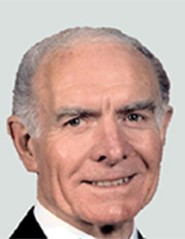
Patrick Gooch studied History of Art, and lectured at the Central School of Art and Design in London. However, marketing was his main occupation; and in this role he worked for a number of German, American and British companies. Latterly, he joined the family trade development company, working principally with government departments of foreign countries. To relieve the tedium of long-haul flights and the four walls of rooms in impersonal hotels, he turned to writing.
Over time he amassed a number of manuscripts, which were stored in the metaphorical bottom
drawer. The number grew until, in exasperation, his wife declared he should either attempt to get
them published, or she would. In fact, she did submit the first novel; and, to date, ten have been published.
Follow him at:
Twitter: https://twitter.com/PATRICKGOOCH6
Goodreads – https://www.goodreads.com/book/show/125004824-caf-7rheinhardt
Buy Link – https://geni.us/JGklqze


What a lovely review and I am glad you got some personal enjoyment from it. Thank you for your support x