
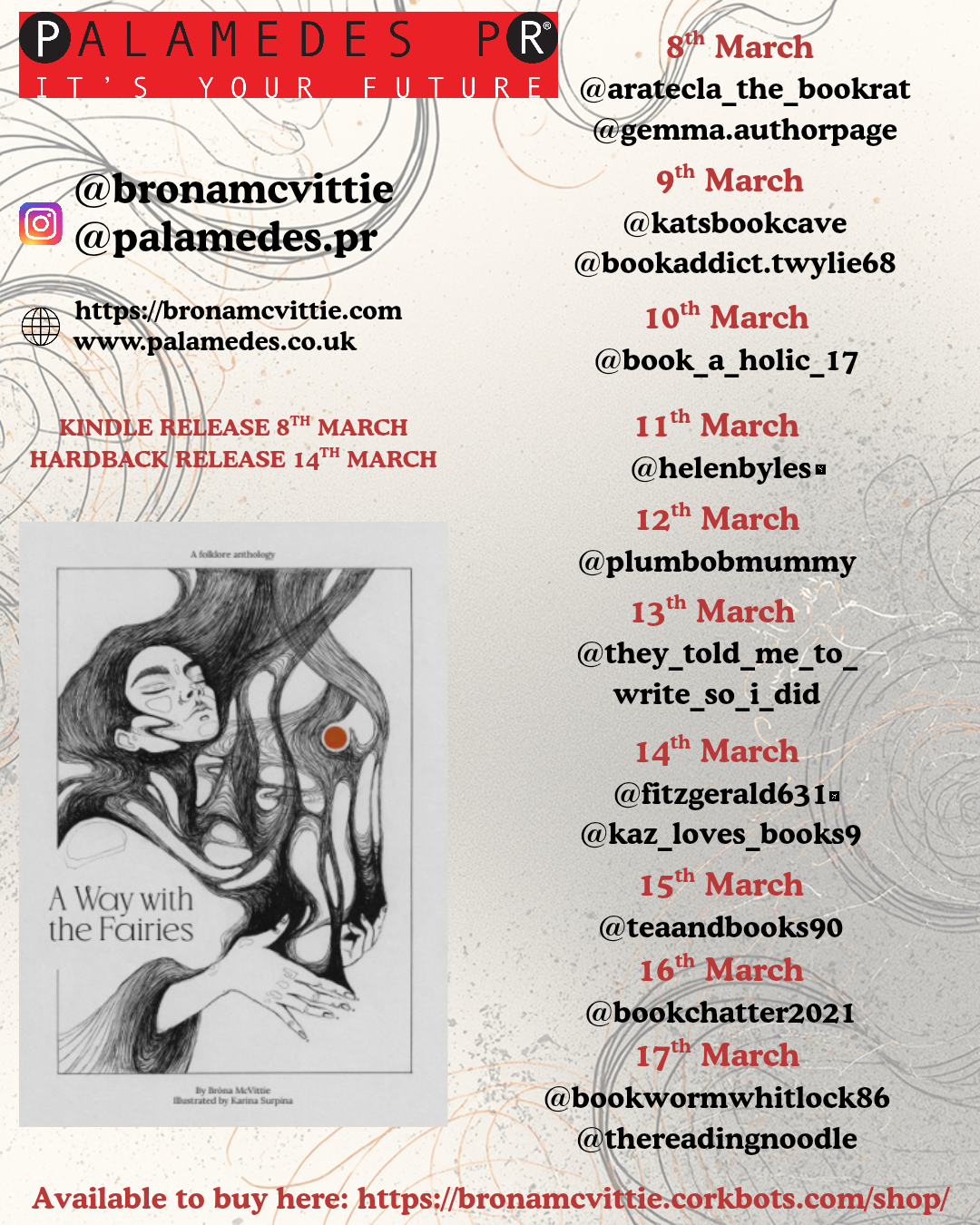
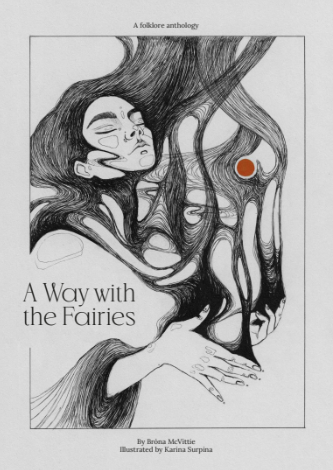
A Way with the Fairies is a captivating folklore anthology that delves into the mysterious world of fairies, myths, and legends as they have been remembered, whispered, and reimagined across generations.
Rooted in Irish tradition yet reaching outward to stories from across Europe, the collection brings together poems, songs, and retold tales that blur the boundary between the natural and the otherworldly.
Fairies here are complex beings—capable of generosity and cruelty, wonder and loss—reflecting the contradictions of human nature itself.
Inspired by the author’s lifelong connection to folklore and the supernatural, and closely linked to the accompanying Supernatural album, this book is both a preservation of old tales and a deeply personal creative offering.
Other information:
1. The supernatural is woven into everyday life. The book invites readers to see folklore as something once deeply embedded in daily existence. Fairies, spirits, and otherworldly forces are presented as part of the same landscape as homes, fields, music, and family life, reflecting a worldview where the unseen was accepted rather than questioned.
2. ‘A Way with the Fairies’ positions itself as a threshold work in that it connects literature, music, mythology, and personal memory. It asks readers not just to consume stories, but to enter them, linger with them, and allow them to resonate.
3. By retelling, adapting, and contextualising these stories alongside music, the book emphasises that folklore is not frozen in the past. It evolves through voice, song, memory, and personal interpretation. Readers are encouraged to see tradition as something alive and ongoing.
4. Transformation, death and rebirth are key themes and symbols throughout e.g. a child is taken by the fairies (The Stolen Child and Fairy Boy); the piper who can only play one tune becomes an extraordinary musician (Piper and the Púca); the 12 brothers are turned into ravens; Lusmore loses his hump, Jack Madden meets a bitter end; Étaín is transformed into a fly and reincarnates in human form.
My Review
To be honest I find fairies a bit scary. Not The Cottingley Fairies kind, but the ‘real’ ones in myths and legends. They are not like Tinkerbell, in a diaphanous dress, with a cute wand, and the type of wings that little girls wear at parties. Or teens at Glastonbury. All fairy dust and glitter.
In folklore they can be mean and cruel, and put spells on unsuspecting people, and they are not very kind to animals. And the people involved seem happy with the level of cruelty to beasts and even pets.
I found the Lithuanian folk tale Twelve Brothers: Ravens really terrifying. OK, so nothing to do with fairies, but still…. After his wife died, leaving him with twelve sons and a daughter, a grieving man decides to remarry, but his bride-to-be turns out to be a witch. She says to him ‘Your daughter may stay, but you must burn your twelve sons and send me their ashes in twelve little bags. Only then will I marry you.’
His ‘clever’ servant told him ‘You have twelve dogs… burn them instead and send their ashes… the witch will never know.’ At this point I would have broken off the wedding, but no, he went ahead and sent the poor dogs’ ashes. Eventually she discovers his deception and turns the sons into ravens.
Of the other folk tales, some are poems or songs, while others are stories. They have all been collected from Ireland, Spain, Lithuania and Ukraine. They form the inspiration for the author’s fourth album Supernatural.
The most famous of the poems is The Stolen Child by W.B. Yeates.
‘Come away, O, human child
To the waters and the wild
With a faery hand in hand
For the world’s more full of weeping
Than you can understand.‘
A Way With The Fairies is a very interesting compilation of tales, which apart from The Stolen Child I had never heard of. There are many from my own heritage (Polish/Romanian) that I will now research.
Many thanks to PalamedesPR for inviting me to be part of this #blogtour
About the Author
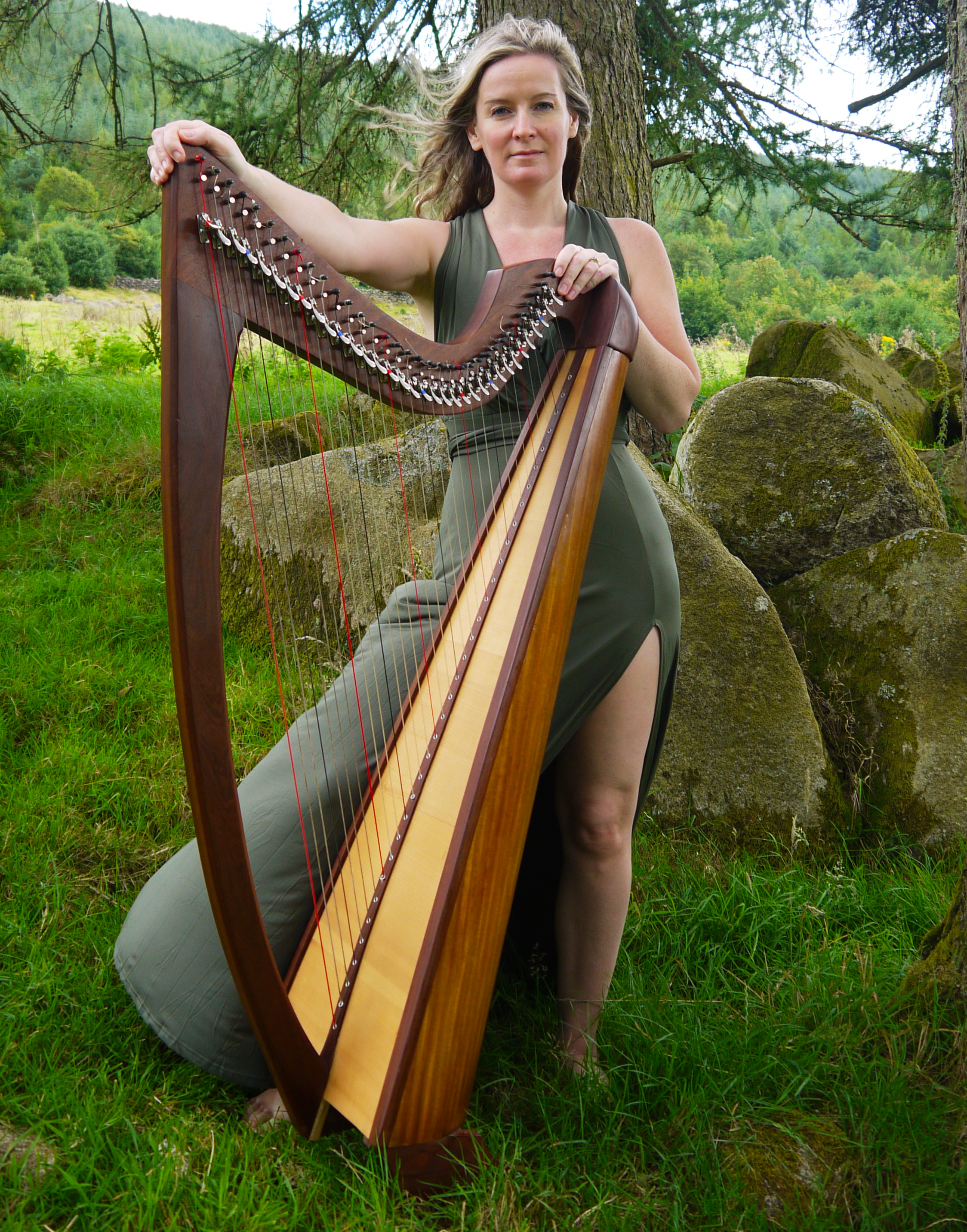
Born in 1975 in County Down, Bróna McVittie is a Northern Irish musician and trained biologist whose work has earned widespread critical acclaim for its imaginative fusion of traditional folk, nature-inspired songwriting and experimental soundscapes. Her music draws deeply on the mythology, folklore and landscapes of her homeland, reimagining traditional ballads and composing original songs that reflect the rhythms of the natural world and the ancient stories woven into Ireland’s cultural fabric.
McVittie describes her music as cosmic folk, blending ethnic instruments, harp, guitar and electronic textures to create music that evokes birdsong, open skies and elemental forces. Her voice, richly accented and clear, carries both the intimacy of a traditional sean-nos singer and the breadth of a contemporary experimental artist, an approach encapsulated in The Guardian’s praise that her music “takes you on its wing, and gives you fresh visions”.
Since her solo debut in 2018, McVittie has released three acclaimed albums. Her first, We Are the Wildlife, was recorded and produced in County Down and interweaves original compositions with re-imagined traditional songs, drawing on local lore such as the County Down ballad “The Flower ofMagherally”. Her 2020 album The Man in the Mountain expanded her palette, balancing experimental electronic elements and collaborations with musicians from diverse backgrounds to deepen the mythic and pastoral dimensions of her work. Most recently The Woman in the Moon (2022) has been celebrated for its broader stylistic range, incorporating jazz, South American rhythms and atmospheric instrumentation while remaining rooted in Celtic song traditions and mythic themes.
McVittie’s music has been championed by publications including MOJO, Uncut, The Guardian and The Independent, with her albums selected for The Guardian’s Folk Album of the Month and twice listed among its year’s best folk records. Her performances span major festivals such as WOMAD and Celtic Connections, and broadcasts on programmes from BBC Radio to RTÉ Radio 1, bringing her compelling blend of folklore, science-inflected curiosity and sonic experimentation to audiences across the UK and beyond.
A note to you, the bloggers, from Brona:
I would like readers to consider the supernatural as enmeshed within and around our natural world, its people and landscapes, and not as mere fantasy. The folklore and legend of Ireland and of other European countries is our cultural lifeblood; something to be celebrated, not forgotten. Our intangible cultural heritage, and the shared themes of death and transformation characteristic of fairy stories across Europe, cement our national identities and international synchronicities. I want the songs and stories to evoke a sense of connection to the unseen world around and within us, to conjure an imagining, a personal reaffirmation of our shared cultural identities, hopes and dreams.
Where can you find her?
Instagram
@bronamcvittie
Background/Book Site
https://bronamcvittie.corkbots.com/
Goodreads
www.goodreads.com
Buy link
www.amazon.co.uk

 Bookchatter@Cookiebiscuit