
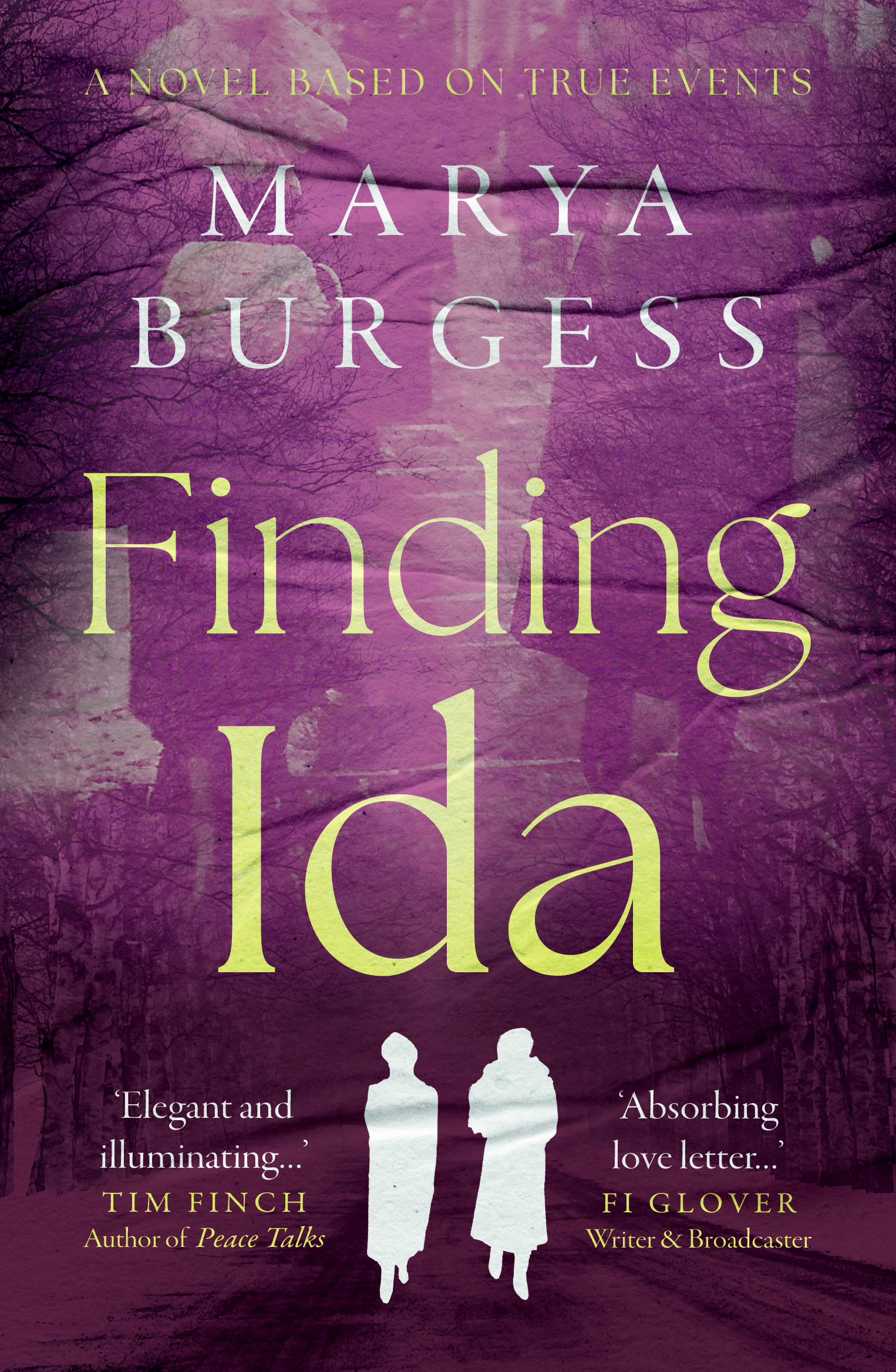
1930s Warsaw. Two privileged sisters: Ida—glamorous and self-assured—and Luiza, the spirited tomboy striving to fulfil the ambitions their German-born father once held for the son he never had.
At just seventeen, Luiza’s world is upended when her Polish homeland is occupied. Caught between two identities—raised speaking both German and Polish—she must now decide where her true allegiance lies. Meanwhile, Ida, newly married and expecting her first child, is living under Soviet occupation in the eastern part of Poland. When she vanishes, taking her baby with her, Luiza begins a search that will span decades.

In a cruel irony, the war that destroys Ida brings Luiza both adventure and love. But her life becomes driven by survivor’s guilt—a need to live not only for herself, but for the sister she lost.
Inspired by the life of the author’s mother, Finding Ida is a gripping family saga. It explores themes of faith, loss and forgiveness, and the enduring human drive to survive. At its heart, it is a story about identity and belonging.
My Review
I could have placed my late father inside this book. The names, the places, the food, all the things that made him Polish and – forgive me – I had forgotten. He joined the Polish infantry at the start of the war but was taken prisoner-of-war in Northern Russia before escaping and coming to the UK where he joined the RAF Polish Squadron. I was born here in the fifties.
According to the author ‘…In England I had played up the esotericism of my provenance…’. At a convent school in the late sixties I felt the same. I was foreign, other, exotic. I didn’t visit Poland until 1978 after a failed attempt (due to my father’s dual nationality and the government’s inability to protect him as Poland was still behind the Iron Curtain) to see my grandmother before she died in 1966. As with Marya: In Poland I became 100 per cent British…’
But onto the book itself. This is a novel about two sisters, but ‘inspired by the life of the author’s mother’. We follow the girls – Ida and Luiza – from childhood up until the 1960s. It starts in 1955 with Luiza in Singapore reflecting on her early life and opening a letter from Poland. We then go back to the early 1930s, when life was relatively carefree. Ida was obsessed with fashion, socialising and having a good time, while younger sister Luiza wanted to ride horses, shoot, and be an engineer.
But as the threat of both the Nazis and the Bolsheviks increased, with Poland somewhere in the middle, life began to change. The family were born in Germany, but the girls had always lived in Poland, so they were ‘caught between two identities’. They also had Jewish friends, which often made them a target for further discrimination.
When war breaks out, Ida’s husband is missing in action, she leaves her child with her mother-in-law to go to her family, but her child is taken, and she loses her grip on reality. Then she vanishes as well, and Luiza spends decades searching for her.
It’s a brilliant book, for me, also being personal and very emotional. I had a Jewish mother so I understand about conflicted identities.
Many thanks to @lovebookstours for inviting me to be part of the #FindingIda book tour.
About the Author
Marya Burgess’s BBC career spanned almost 40 years, reporting for Woman’s Hour and PM, producing All in the Mind and For One Night Only, and finally curating The Listening Project in partnership with the British Library. Over the years, Marya attempted to tell her mother’s remarkable story, but it was only after getting a dog and moving to rural Scotland that Finding Ida finally took shape.

Handles/Tags
Instagram
@MaryaBurgessAuthor
@TheBookGuildPublishing
@lovebookstours
@LBT.Crew
#Ad #LBTCrew #Bookstagram #FreeBookReview
X (Twitter)
@lovebookstours
Ad #LBTCrew #Booktwitter #FreeBookReview
Threads
@lovebookstours
Facebook
@lovebookstours
TikTok
@lovebookstours

 Bookchatter@Cookiebiscuit
Pingback: My Top 10 Books of 2026 – Part Two – Bookchatter@Cookiebiscuit