
You are the average of the five people you spend the most time with…
When a stranger utters these words to Allegra Bird, nicknamed Freckles, it turns her highly ordered life upside down. In her current life as a parking warden, she has left her eccentric father and unconventional childhood behind for a bold new life in the city.
#Freckles @Cecelia_Ahern @fictionpubteam @annecater @RandomTTours #RandomThingsTours
But a single encounter leads her to ask the question she’s been avoiding for so long: who are the people who made her the way she is? And who are the five people who can shape and determine her future? Just as she once joined the freckles on her skin to mirror the constellations in the night sky, she must once again look for connections.
Told in Allegra’s vivid, original voice, moving from Dublin to the fierce Atlantic coast, this is an unforgettable story of human connection, of friendship, and growing into your own skin.
Five people. Five stars. Freckle to freckle. Star to star

My Review
A traffic warden as the main protagonist in a novel? How in the world was I going to like this? Well I actually loved it, though I cringed occasionally when she issued a ticket. She can be a bit of a jobsworth.
Allegra Bird is the hero of our story. Nicknamed Freckles – you guessed it because she has freckles – she is a rather unusual girl. Raised by her eccentric father Pops, her Spanish mother gave her up at birth. She has left the island where she lived all her life and moved to Dublin to fulfil her dream of becoming a Gardai. Unfortunately she didn’t get accepted so has taken a job as a parking warden instead.
You are the average of the five people you spend the most time with…
One day while issuing yet another ticket to You Tuber Tristan known as Rooster, he tells her about the five people. So if your five are all losers, what does that make you?
Allegra takes this to heart and her quest leads her to discover who her real friends are and who will influence her the most. Just as she once joined the freckles on her skin to mirror the constellations in the night sky, she must yet again look for connections. It’s a heartwarming tale full of humour, friendship and growing to love yourself as a person.
And my favourite character in the book? Tristan for me. Even with his Prada footwear and yellow Ferrari that Allegra hates so much.
Many thanks to @annecater for inviting me to be part of #RandomThingsTours and to The Pigeonhole and to my fellow Pigeons for making this such an enjoyable read..
About the Author
Cecelia Ahern is one of the biggest selling authors to emerge in the past fifteen years, having sold more than 25 million copies worldwide in over 50 countries. Two of her books have been adapted as major films and she has created several TV series in the US and Germany. Her novel PS I Love You was a New York Times bestseller and huge #1 bestseller in Ireland and the UK. In 2007, it was made into a major film starring Hilary Swank and Gerard Butler and most recently, Cecelia wrote the sequel- Postscript which was an instant bestseller.
Cecelia has written 13 bestselling novels including two YA novels and a critically acclaimed collection of short stories, ROAR which is being produced by and starring Nicole Kidman. Her novels have resonated with readers everywhere through their thoughtful, unique and inspiring storytelling and have won numerous awards. Cecelia lives in Dublin with her family. To find out more please visit http://www.cecelia-ahern.com

+ Canada, crime fiction, earthquake, fiction, friends, kidnapping, murder, revenge, review, serial killer, thriller
Buried by Elle Croft
You’re trapped underground with a serial killer. Would you save their life to protect your own?
The Artist
No one knows who The Sculptor is. A successful artist, who’s works sell for millions – each one with a deadly secret at the centre of each piece.
The Killer
There’s a serial killer on the loose – dismembering women’s bodies and leaving them washed up along the shore. The Coastline Killer is free and no one knows how to catch him.
The Victim
Alice has designed her life to be as safe as it possibly can be. She takes no risks, and makes sure nothing is a threat to her or those she loves.
But when an earthquake brings all three together, will anyone get out alive? And if you were trapped with a serial killer, would you protect their secrets to save your own life?
My Review
I wish I’d discovered Elle Croft before. What an explosive, brilliant ‘serial-killer-thriller’ (I love that description).
Alice gives talks about disaster management. She’s good at her job though she’s never actually experienced a real disaster. Her life is risk-free – she takes no chances and makes sure she and her family and friends are always safe. Until she is kidnapped by a serial killer, trapped underground and tied to a gurney. Then an earthquake strikes – it’s The Big One that the people of Vancouver have been waiting for – and she must use all her knowledge to stay alive.
But it’s not that simple. She’s buried underground with the man who took her – the serial killer known as The Coastline Killer who dismembers women’s bodies and leaves them washed up along the shoreline. But they need each other to survive.
We also hear from The Sculptor, a strange, twisted artist, a fan of Rodin, whose work is celebrated worldwide and sells for millions. But each sculpture carries a deadly secret and no-one knows the identity of this talented individual.
It’s so tense and at times terrifyingly brutal (not for the faint-hearted), if I had not been reading in staves with online book club The Pigeonhole, I would have devoured it in one go.
Many thanks to The Pigeonhole, the author and to my fellow Pigeons for making this such an enjoyable read.
About the Author
Elle is the author of psychological thrillers, a true crime podcaster, blogger and digital marketing consultant. She grew up in Adelaide, Australia, but now lives in London, which is the perfect place to live if you love to travel (which she does). She started her blog in 2010, and it quickly evolved into a travel blog, although these days it tends to be where she documents her writing experiences and the odd adventure.
She co-hosts the Crime Girl Gang podcast with her crime writing pals, Victoria Selman and Niki Mackay, and together they discuss true crime cold cases, with a fictional twist.
With over six years’ experience as a digital marketer, she combines her passions for writing and marketing by helping other authors perfect their website, social media, newsletter and online advertising. You can find more about the services she offers for authors on her other website, Digital Marketing for Authors.
When she’s not busy with all of the above, she can be found running (she loves a half marathon), sewing, making tacos, reading, or staring out the window at the foxes that live behind her flat.
You can find (and follow) her on all of the usual social channels:

+ crime fiction, dark humour, fiction, murder, political thriller, review, Russia, spy story, thriller
The Late Train to Gypsy Hill by Alan Johnson
Gary Nelson has a routine for the commute to his rather dull job in the city. Each day, he watches as a woman on the train applies her make up in a ritual he now knows by heart. He’s never dared to strike up a conversation . . . but maybe one day.
Then one evening, on the late train to Gipsy Hill, the woman invites him to take the empty seat beside her. Fiddling with her mascara, she holds up her mirror and Gary reads the words ‘HELP ME’ scrawled in sticky black letters on the glass.
From that moment, Gary’s life is turned on its head. He finds himself on the run from the Russian mafia, the FSB and even the Metropolitan Police – all because of what this mysterious young woman may have witnessed. In the race to find out the truth, Gary discovers that there is a lot more to her than meets the eye . . .
My Review
I’m not usually a fan of books about modern-day spies, the Russian mafia and oligarchs. But The Late Train to Gypsy Hill is all of that but with added laugh out loud humour. The debut novel from former Home Secretary Alan Johnson is slick, fast-paced, wicked and hilarious.
Poor Gary, our hapless hero, who is more like a reject from The Inbetweeners than a budding James Bond, is drawn into a race against time, when the young woman he has admired every day, invites him to take the empty seat beside her. Fiddling with her mascara, she holds up her mirror and Gary reads the words ‘HELP ME’.
Earlier on, a Russian documentary film-maker has been poisoned with Polonium-210 in the very posh Strand Hotel in London, but was he the intended victim? Or did the – as we now know Ukranian – woman from the train/waitress-on-the-run Arina Kaplin accidentally swap the mugs?
It took me ages to work out who was who amongst the Russians, so I’m not even going to try and name them. Suffice to say they consist of members of the FSB (formerly the KGB), the top mobsters, the stab-you-in-the-back henchmen and the thugs, though the lines are blurred much of the time. No-one trusts anyone and I don’t blame them. They are trying to scramble over each other’s bodies to get to the top of Russian criminal gang Krovnyye Bratya and they soon realise there is no loyalty amongst gangsters.
But what makes this so funny is the touches of comedy in what should be the most terrifying moments. The thugs attempt to abduct the wrong woman in a stolen Nissan Micra (I hope it’s the old two-door version for true comic effect), Arina escapes in a Parcelforce van (of course), and the final chase is like something out of a French farce.
I hope we will see a lot more from this author, already well-known as an MP, a writer of non-fiction and occasional TV personality. The Late Train to Gypsy Hill is one of my favourite books of 2021.
Many thanks to The Pigeonhole and to my fellow Pigeons for making this such an enjoyable read.
About the Author
Alan Arthur Johnson (born 17 May 1950) is a British politician who served as Secretary of State for the Home Department from 2009 to 2010 and Shadow Chancellor of the Exchequer from 2010 to 2011. A member of the Labour Party, Johnson served as the Member of Parliament (MP) for Hull West and Hessle from 1997 until his retirement from politics in 2017.
His first book, This Boy, won the RSL Ondaatje Prize and the Orwell Prize in 2013. His second, Please Mister Postman, won the National Book Award for Autobiography of the Year in 2014. His third, The Long and Winding Road, was published in 2016 and won the Parliamentary Book Award for Best Memoir. The Late Train to Gypsy Hill is his first fiction novel.

+ civil rights, fiction, folklore, Historical fiction, love, murder, prostitution, racism, rape, religion, review, serial killer, sisterhood, slavery, superstition, Voodoo
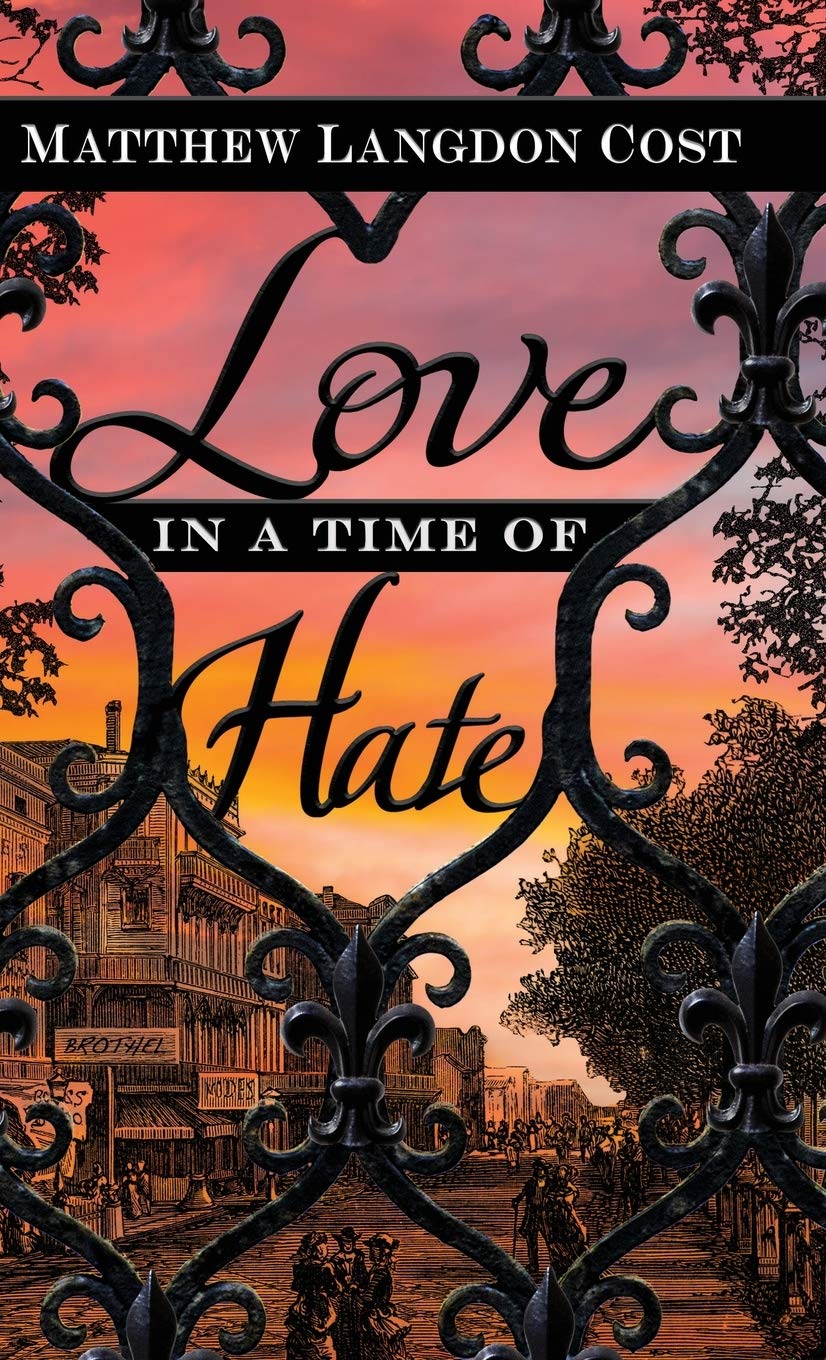
Love in a Time of Hate by Matthew Langdon Cost
“A Voodoo ritual?” Emmett stared dumbly at her.
A young man from Maine fights for social equality in New Orleans after the Civil War while pursuing a murderer of prostitutes, becoming enmeshed in voodoo, and falling in love.
“Education is the tool that makes us all equal, whether we are Black, white, Indian, woman, or man,” Manon said.
#LoveInATimeOfHate @MattCost8 @annecater @RandomTTours #RandomThingsTours
Much like Louisiana’s famous gumbo, Love in A Time of Hate, is a spicy dish of varied ingredients. The main theme is the struggle for social equality between the whites, Blacks, and Creoles, but
flavour is added with the subplots of politics, voodoo, murder, love, and hate.
And then came the Rebel scream, a sound Emmett had not heard since near the end of the Great War. New Orleans becomes a literal battleground as carpetbaggers, scalawags, Creoles, and recently freed slaves fight against the entrenched southern plantation notion of white superiority.
My Review
It’s not every day you read a historical fiction story and come across one of your relatives. Or my husband’s in this case. It’s only a swift mention of burlesque dancer Lydia Thompson and has no importance to the story, but I still got very excited.
Love in A Time of Hate is a chilling tale about the Black and Creole people’s fight for equality in mid-1800s Louisiana and particularly New Orleans. The story is peppered with politics, white supremacy and Voodoo. I loved the Voodoo part, especially the inclusion of characters, real or mythical, (such as Voodoo Queen Marie Laveau, the Iwa, Mister Daniel Blanc and of course Baron Samedi (straight from Live and Let Die). It’s always fascinated me since that film came out.
Young Emmett Collins is the central character. Hailing from Maine in New England, he goes to fight in the Civil War when he is just fourteen years old. When the war ends his work includes the education of the Freedmen following the abolition of slavery in 1865.
But just because slavery was now illegal didn’t make things easy for people of colour. Plantation owners had relied on slaves to work for them, but now they were free, the white owners could see that the tide was turning. The slaves wanted the vote, a place in Parliament and a say in politics. The plantation owners wanted their power back.
As the white supremacy movement was coming out of the shadows, black men, women and children were being hanged for fictitious crimes. Poor whites were being pitted against poor blacks for what little resources there were to go around and the elite were rising back to the top like the scum many of them were. Inter-racial marriage was frowned upon, though for years white men had taken black women as lovers, but now it could lead to a terrible revenge being exacted.
As well as all this going on, young black prostitutes are being raped, beaten and murdered, their bodies dumped in the street. Emmett is determined to find the killer, but doesn’t always get the help he needs as there are some who thought they had it coming.
It’s at times a harrowing tale – the hangings of children were very upsetting – but there is also love, friendship and hope. This is a book that will stay with me for a long time to come.
Many thanks to @annecater for inviting me to be part of #RandomThingsTours.
About the Author
Over the years, Matthew Langdon Cost (aka Matt Cost) has owned a video store, a mystery bookstore, and a gym. He has also taught history and coached just about every sport imaginable. During those years—since age eight, actually—his true passion has been writing. I Am Cuba: Fidel Castro and the Cuban Revolution (Encircle Publications, March, 2020) was his first traditionally published novel. Mainely Power, the first of the Mainely Mysteries featuring private detective Goff Langdon, was published by Encircle in September of 2020, followed by book two, Mainely Fear
(December, 2020), and book three, Mainely Money (March, 2021). Also forthcoming from Encircle Publications are his Clay Wolfe / Port Essex Mystery series: Wolfe Trap, Mind Trap, and Mouse Trap; as well as his new historical fiction novel, Love in a Time of Hate.


It is Midsummer’s Day 2016, the day of the Brexit referendum, when Bill, much given to all-consuming enthusiasms, finds ominous patterns on his cellar floor. Up and down the land, the result is viewed as either triumph or catastrophe, dividing close families and shattering long relationships. Not so the two old sparring partners, Bill and Pete, whose friendship ‘a bouillabaisse of habit, shared experience, prejudice, insight, self-delusion, envy, competitiveness and general wear and tear,’ appears robust enough to survive any difference of opinion. But can it survive secret betrayal?
#LoveUnderLockdown @GracePublicity #MichaelEstorick

Bill and Pete have been best friends since they were ten. Now they’re retired, in their sixties, and meet for lunch every Tuesday, for badinage about golf, politics, their stagnant love lives, their mutual friend Guy who lives in a tower in Gascony, but mainly Bill’s fractious relationship with his son Ivan.
The book is filled with Bill’s humorous tirades against the younger generations. Ivan is forever moving in and out of his father’s house and dismisses everything his father Bill says. But while Brexit tears Bill and Ivan apart, Coronavirus and lockdown thrusts them together, forcing them to rebuild their bond.
Love Under Lockdown echoes Turgenev’s masterpiece Fathers and Sons and is a fascinating commentary on the divide between the generations. Spanning the four years from the Brexit Referendum to the end of the first lockdown, we watch these characters navigate their way through the chaos and uncertainty and discover what really matters. They fall out, fall in love, and despite their many differences, they still have each other. And to escape, Bill always has the golf club.
Love Under Lockdown is a story of friendship and love, which will have you missing the characters long after you’ve closed the book.

My Review
‘Bill and Pete have been best friends since they were ten. Now they’re retired, in their sixties, and meet for lunch every Tuesday, for badinage about golf, politics, their stagnant love lives, their mutual friend Guy who lives in a tower in Gascony, but mainly Bill’s fractious relationship with his son Ivan.‘
I was having lunch in the staff restaurant the other day and suddenly I laughed out loud. I apologised to my colleague and explained about the passage I was reading at that moment. I know so many ‘Bills’ I told her. I can hear their voices in his words. So do I, she said. And we both laughed.
I’m not sure I know any ‘Petes’ though, but probably a number of people who make up one ‘Pete’ and I definitely don’t know any ‘Guys’. At least no-one with a grey ponytail who lives in a tower in Gascony, or anywhere else for that matter. I know a few ‘Ivans’ though and our discussions (or arguments) about each other’s generations would be similar. You lot had it so easy. Not as easy as you etc. Except in my family we all voted to remain in the EU so that’s one thing less to disagree on.
This book really made me laugh. In theory Bill should be everything I hate but he does make me giggle. I would quote a few of his remarks but my review would probably get taken down for being too un-PC.
The story here is really about two sixty-something men (plus artist Guy from time to time) who have known each other all their lives. Things have changed over the years for all of them, but even their different politics, the death of Bill’s wife Carol and budding romances can’t separate them. The main trouble for Bill is that he and son Ivan clash over everything, yet Pete and Ivan get along fine. I guess the closeness of father and son just fan the flames, while Ivan and Pete can remain more neutral.
As someone from the same generation as Bill and Pete, the book really resonated with me. I have had many an argument over Brexit with colleagues at work (often much younger than me) – one of whom is very pro-leave and teases me constantly with the phrase ‘don’t barrage the Farage’ as he knows how much I despise the horrid man. Amazon will no doubt remove that bit as well.
To sum up, a great read. I hope you enjoy it as much as I did.
Many thanks to Grace Pilkington Publicity for inviting me to be part of the blog tour.
About the Author
Michael Estorick was born in London in 1951. He was educated at Magdalene College, Cambridge before going on to study at the City and Guilds of London Art School. He has been the Chairman of Trustees for the Estorick Collection since 1995. Estorick is the author of seven novels and has written for publications including The Independent and The Tablet. He is the chairman of the Estorick Collection. Love Under Lockdown is the sequel to About Time, which the Jewish Chronicle described as ‘well-observed, humane and very funny.’ Michael lives in London.

Q & A
What inspired you to write about the period from Brexit to Lockdown?
The period 2016-2020 seems to have a distinct shape. As far as my characters are concerned, I could see how a relationship which was falling apart (Brexiter father/Remainer son) might be surprisingly transformed by outside events (the Covid pandemic). Brexit and the pandemic have revealed huge institutional problems within our society as well as gaps in understanding and sympathy between the generations and regions. Most of the values and beliefs with which I grew up have been trashed. The Tory win in 2019 and the collapse of the Labour party have shown how traditional loyalties have been undermined by unstoppable economic and social changes. The growing influence of the internet encourages propaganda and ignorance: knowledge is no longer painstakingly acquired through understanding and experience but instantaneously at the press of a button. One fact is now no better or worse than another. Opinion matters more than information. The uninformed and ignorant tolerate no disagreement without resorting to abuse and even violence.
The pandemic has revealed, as shared historical experiences inevitably do, the adaptability of some people and the selfishness of others, the unreliability of ‘experts’ and the failure of public institutions to cope with crises they should have prepared for: short-termism, the absence of long-term thinking and policy, the general absence of any consensus over what kind of society we want to live in.
Every viewpoint, however cranky, is evidently regarded as equally valid; respect or understanding of tradition and history has been discarded by people for whom ignorance is only an encouragement to self-expression; tiny minorities act as if they are in the majority and threaten anyone who disagrees with them. The pandemic has been the nearest thing to a world war in my lifetime, and in that sense has been utterly compelling. My experience is as valid as anyone else’s, even if my personal circumstances are un-typical: as a privileged white male, I evidently no longer
count, despite white males being in the majority (majorities no longer count either), particularly as I have no particular axe to grind. Some people think they are especially entitled and that society has a duty to protect and provide for them, without their owing anything in return; an absurd expectation which leads governments to make impossible promises, and inhibits individuals from doing things for themselves; risk, danger and initiative are no longer considered an essential part of life – indeed a condition of life itself – as if the comfortable society we live in today is not the hard-won product of a long and violent historical evolution, but has been the natural condition of man down the ages; and the absurd belief some people appear to hold that those alive today are somehow more evolved than their forerunners.
From a previous novel About Time, published two year ago, I had a cast of ready-made characters in their 60’s, living in London, who I wanted to understand better as they moved towards the end of life, and found themselves thrust into this new and unfamiliar world where they discover they are considered dispensable. The book ends during the first lockdown and a subsequent novel, provisionally titled No Way Back, will show how public events further constrain the characters, who are unable to follow up on decisions like moving house and commemorating rites of passage. I don’t know what will happen next in the book (about one third written), except than one important character will die, and his death will have profound consequences, not least in giving new life to another (not through the use of his organs, I should add!). As I am invariably the last to know what my characters are up to, I much look forward to discovering how it all turns out, both in my novel and, perhaps even more importantly, in the world outside my pages.
Have either of the two events affected you personally? Did you fall out with friends/family as a result of Brexit?
No serious fallings out over Brexit though plenty of arguments after the referendum with people who refused to accept the result (that in itself spoke volumes). I don’t think Remainers, who were too complacent to ever make a proper case for staying in the EU, understand why anyone would ever vote against his apparent economic self-interest. This includes me, as I have a house in France which I won’t be as free to visit as before.
Leavers were anything but triumphalist, and although the result was only ‘advisory’, Cameron felt obliged to accept it and hand over power, conveniently stepping out of the firing line and leaving it to others to clean up, while he soon made millions out of the mess. The sight of so many ex-politicians and Prime Ministers insisting we must vote again was repellent. I discovered leave voters where I least expected to.
As in the 2014 Scottish independence referendum, they had sensibly preferred to keep shtum until after the event, when they would be free to reveal their true colours, often to others’ shock and disgust.
How much research did you have to do and do you consider yourself to be very politically aware?
I do little specific research other than to make sure I get dates and names and facts correct. I did ask a friend of mine to give me detailed information about a cruise he had taken early in 2020, which I stuck to closely in the novel (without feeling remotely constrained by the facts).
I read the press and listen to the news and take an interest in what is going on, but I remain very naïve politically, expecting politicians to do what they say, to set an example and behave decently. Instead, they generally behave worse than the average person. I shouldn’t be surprised: if you pay peanuts you get monkeys, another unfortunate Cameron legacy. Courting popularity is dangerous among people who sometimes need to make unpopular decisions, but is essential in anyone making claims to leadership.
Are your characters based on real people or are they totally from your imagination?
Totally from my imagination, and a constant surprise to me, though inevitably they have bits of me in them and also of my friends. I don’t think there is anything specifically autobiographical other than one of my characters obsession with golf, and my belief that the most productive thing one can do in life is to get out of one’s own way.
Readers who know me nevertheless see me in most of my characters, assume my books are autobiographical, and even claim to hear my voice in my characters. I’m not sure whether to feel flattered by any of this. I never plan my novels and have no idea what will happen in them. If I knew, I wouldn’t bother to write them, as the pleasure and satisfaction comes from finding out unexpected things. I am not sure if my novels answer specific questions, but there always is some question, dilemma or situation which I am wanting to explore and understand through writing about it.
What is your typical day as a writer? Has Covid had an impact on this?
My time has always been my own, but without Covid I wouldn’t have written Love Under Lockdown. It provided a subject and context and above all an experience which I could observe as it was happening; for once I was an active part of history and not just an ‘independent’ observer. My experience may not have been typical, if such a thing exists, and I was certainly in a happier position than most to enjoy the experience. Beyond that, I have no routine and write when I want to, and stop when I think I’ve done enough. I write very quickly, but because I have so little knowledge of my characters, editing a finished text is usually deeply frustrating, as I find myself asking questions about them which I hadn’t at the time of writing, and also tend to over edit, and to look for consistency where it may not exist.
How important is setting in your books?
Good question. I have written a number of novels factually based on my family. I have also written one novel set during the Falklands war (What are Friends For, 1990), but I use very little physical description in my writing, either of places or people. Plot, character, story, and the relationships between people are developed primarily through dialogue. I’ve written one original film script set against the Iraq War (called Friendly Fire, which originated in a specific historical incident) which I am proud of but it never got anywhere, partly through laziness (once something is finished I lose interest in it), no doubt mainly because it wasn’t sufficiently focused or visual: too much talk and not enough action, and also too many characters. And by the time it was finished probably out of date, as other wars had broken out in the meantime!
Do you listen to music while you write? Or do you prefer total silence?
I used to sometimes listen to music when working but no longer do so. (I listen to a great deal of music at other times). Whatever is going on in my head is sufficiently noisy, and music only distracts me. I used to write in crowded places like bars, where I was in my own bubble, but have now stopped and work pretty exclusively at home. I write whenever I want to and for as long as I like and have no specific routine. I know that if I think of something as I’m going to sleep I MUST write it down or I’ll forget it, though my favourite scene in Friendly Fire was something I had dreamed and, very unusually, remembered in full when I woke up. I thought it was great and then as the day went on not so great but at the end of the day I wrote it down and I immodestly thought it was wonderful, and still do. Alas, it’s the only time that’s happened to me. Now if I wake at 5 am with an idea I go to work. To me, writing is the least lonely activity, and even when not writing I often hear my characters chatting away. All I need to get going is a sentence or an idea, and then I am off. Or, rather, they are!
What sort of books did you read as a child and what is your favourite book ever (as an adult or child)?
I can’t remember what I read as a child apart from the comic Hotspur, Treasure Island and a Tale of Two Cities. And my sister’s girly comics about ballet dancers which she didn’t want me to have (I dislike ballet almost as much as I do my sister!). My favourite book, in as much as it is the one I read (or dip into) most often, is a book of essays called Golfer at Large by Charles Price. I am not sure what rereading tells me, other than that either I or the book has changed, and for that not to happen is very significant. I have loved Evelyn Waugh but on re-reading they often seem quite different books. I admired Anthony Powell, whose twelve volume Music of Time I’ve read three times, but now think it complete rubbish. I find Proust unreadable and can’t get past page 100 of War and Peace. I always enjoyed Chekhov’s stories. Also those of Mavis Gallant and J Maclaren Ross. I most of all admire Maurice Gee, a 90 year old Kiwi novelist, to whom my latest novel is dedicated and think Going West, which I recently reread for the second time, as good a novel as any, though I would have written one scene differently and had the cheek to tell him so!
What do you consider your greatest achievement?
Very hard to answer. Setting up the Estorick Collection, a family collection of 20th century Italian art given to the nation by my father, in Canonbury Square. The satisfaction in seeing how much the public love the place is huge and outweighs any feelings of resentment I might have at not having the paintings all to myself! I like setting things up but not running them. The Collection has been open for almost 25 years and will have its work cut out fighting cancel culture. Trying to keep an open, independent mind; to be generous and not judgemental in the way I was when I was young and arrogant.
To hopefully have been a better father than my own was to me.
+ childhood, family, female friendship, fiction, folklore, friendship, literature, obsession, rape, relationships, review, secrets, superstition
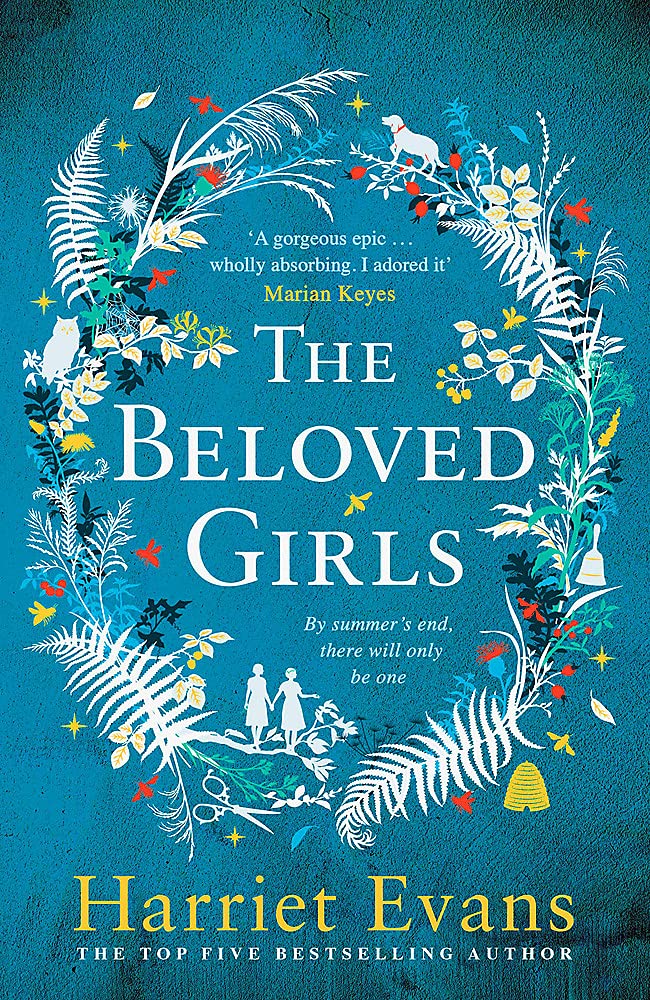
The Beloved Girls by Harriet Evans
‘It’s a funny old house. They have this ceremony every summer . . . There’s an old chapel, in the grounds of the house. Half-derelict. The Hunters keep bees in there. Every year, on the same day, the family processes to the chapel. They open the combs, taste the honey. Take it back to the house. Half for them -‘ my father winced, as though he had bitten down on a sore tooth. ‘And half for us.’
#TheBelovedGirls @harrietevansauthor Instagram @annecater @RandomTTours #RandomThingsTours
Catherine, a successful barrister, vanishes from a train station on the eve of her anniversary. Is it because she saw a figure – someone she believed long dead? Or was it a shadow cast by her troubled, fractured mind?
The answer lies buried in the past. It lies in the events of the hot, seismic summer of 1989, at Vanes – a mysterious West Country manor house – where a young girl, Jane Lestrange, arrives to stay with the gilded, grand Hunter family, and where a devastating tragedy will unfold. Over the summer, as an ancient family ritual looms closer, Janey falls for each member of the family in turn. She and Kitty, the eldest daughter of the house, will forge a bond that decades later, is still shaping the present . . .
‘We need the bees to survive, and they need us to survive. Once you understand that, you understand the history of Vanes, you understand our family.’
My Review
Another book that’s gone straight to my top books of the year. This book is so unique, amazing, heartfelt, sad and at times quite creepy. It revolves around the annual bee ceremony where the Hunter family and the whole community must follow the path to the old Chapel at Vanes to open the combs and taste the honey.
‘Half for us and half for them, else the Devil take us all’
It all sounds highly risky and even more so this hot summer of 1989. August 31st is the 18th birthday of Joss and his twin sister Kitty and the bees have had to wait an extra two weeks and this had made them crosser than ever. We discover there have been accidents in the past. But it’s an obsession for Charles Hunter and his sister Ros – why is the ceremony so important to them?
‘We need the bees to survive, and they need us to survive. Once you understand that, you understand the history of Vanes, you understand our family.’
Each year members of the family must play their parts including The Outsider and The Beloved Girls. There is a song that is sung during the procession. It is chanted to the tune of ‘Green grow the rushes O….’
‘Three, three, the rivals,
Two, two, the beloved girls’
Clothed all in green, O…
One is one and all alone, and ever more shall be so.‘
There are so many elements to this book that it’s hard to give a resume. In 1984, 17-year-old Janey Lestrange goes to stay with the Hunters – Joss, Kitty, little sister Merry, mum Sylvia and dad Charles. She has a great time and bonds with Kitty but does not return until 1989, the year of a devastating tragedy.
Many years later, Cambridge graduate and successful barrister Catherine, married to Davide, and with two children Carys and Tom, vanishes from the train station on the eve of her anniversary. A number of things have happened in her life and these are revealed at stages throughout the book. To tie them all together and discover the truth, we must examine the lives of young Janey, her father Simon, Sylvia Hunter and Kitty.
I can’t praise this book highly enough. This is a story to be savoured, not rushed and then read again. I am certain it will become a classic – it’s so sad and beautiful and full of emotion.
Many thanks to @annecater for inviting me to be part of #RandomThingsTours and to NetGalley for an ARC in exchange for an honest review.
About the Author
Harriet Evans is the author of several top ten bestsellers including the Sunday Times bestselling The Garden of Lost and Found and Richard and Judy bookclub selection The Wildflowers. She used to work in publishing and now writes full time, when she is not being distracted by her children, other books, sewing projects, puzzles, gardening, and her much-loved collection of jumpsuits.

Last year, she and her family moved from London to Bath.

+ Canada, Detective novel, euthanasia, family, fiction, friendship, murder, murder mystery, police drama, revenge, review, secrets, thriller
The Madness of Crowds (Chief Inspector Armand Gamache #17) by Louise Penny
You’re a coward.
Time and again, as the New Year approaches, that charge is leveled against Armand Gamache.
It starts innocently enough.
While the residents of the Québec village of Three Pines take advantage of the deep snow to ski and toboggan, to drink hot chocolate in the bistro and share meals together, the Chief Inspector finds his holiday with his family interrupted by a simple request.
He’s asked to provide security for what promises to be a non-event. A visiting Professor of Statistics will be giving a lecture at the nearby university.
While he is perplexed as to why the head of homicide for the Sûreté du Québec would be assigned this task, it sounds easy enough. That is until Gamache starts looking into Professor Abigail Robinson and discovers an agenda so repulsive he begs the university to cancel the lecture.
They refuse, citing academic freedom, and accuse Gamache of censorship and intellectual cowardice. Before long, Professor Robinson’s views start seeping into conversations. Spreading and infecting. So that truth and fact, reality and delusion are so confused it’s near impossible to tell them apart.
Discussions become debates, debates become arguments, which turn into fights. As sides are declared, a madness takes hold.
Abigail Robinson promises that, if they follow her, ça va bien aller. All will be well. But not, Gamache and his team know, for everyone.
When a murder is committed it falls to Armand Gamache, his second-in-command Jean-Guy Beauvoir, and their team to investigate the crime as well as this extraordinary popular delusion.
And the madness of crowds.

My Review
There’s a kind of breathlessness about the style of writing. Full of throwaway comments like ‘….Gamache knew the wraiths hidden in this basement. He could even name them. Not actually an advantage, when it came to wraiths.’ And the sweary duck. What’s that all about? I think maybe if I had read at least some of the previous 16 books I would understand. Especially about the duck. And the monkeys. Or maybe not the monkeys.
“They brush them with garlic butter, then grill them over coals,” says the Asshole Saint Dr Vincent Gilbert.
“What a coincidence,” replies Gamache, scanning the menu. “Exactly what I plan to do with you.”
The writing, the dark humour and the repartee are brilliant. I love it.
But this is no comedy. There’s been a murder, the body found lying face down in the snow. Who is it and why did someone kill her? So many questions, so many suspects. And how does this link to other events many years in the past? If it even does.
The plot revolves around Professor Abigail Robinson whose statistics show that there won’t be enough money to go round following the Covid pandemic. She therefore suggests that the sick and elderly should be euthanised in order to protect the rest. And this also includes disabled babies and children. I’m reminded of Nazi Germany and the theory of eugenics. But are Abigail’s conclusions spurious? Can statistics be manipulated? And is fear and desperation the reason for The Madness of Crowds? It would appear so as people are buying into it. And she’s coming to a university near you to cause unrest and the threat of violence.
There is a lot of discussion between the main characters such as Armand Gamache, his son-in-law Jean-Guy, his wife Reine-Marie, fellow police officer Isabelle and Chancellor Collette Roberge. Occasionally there is too much speculation and I started to lose track at times.
And what part does Haniya Douad play? Called the Hero of the Sudan and nominated for the Nobel Peace Prize, I didn’t really understand why she is there, except maybe as a sounding board. Unless we have met her before, though I don’t think we have.
I really enjoyed this book, though I wish I had read at least one or two of the others. Then I would have understood the characters better and there are a lot of them. But it’s a brilliant, intelligent read, sometimes more of a why-done-it than a who-done-it.
Many thanks to The Pigeonhole and my fellow Pigeons for making this such an enjoyable read.
About the Author
LOUISE PENNY is the author of the #1 New York Times and Globe and Mail bestselling series of Chief Inspector Armand Gamache novels. She has won numerous awards, including a CWA Dagger and the Agatha Award (seven times), and was a finalist for the Edgar Award for Best Novel. In 2017, she received the Order of Canada for her contributions to Canadian culture. Louise lives in a small village south of Montréal.

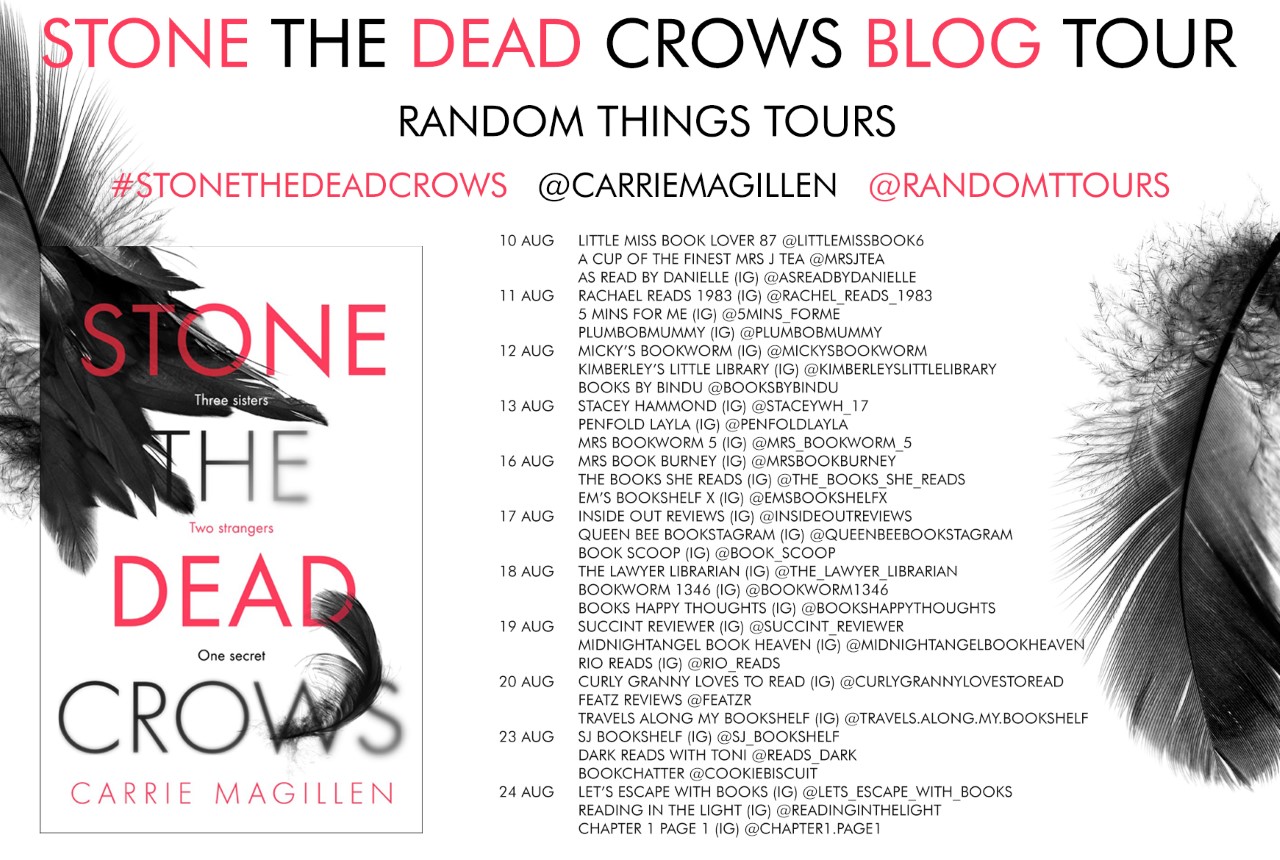
Three sisters. Two strangers. One secret.
Maggie has an impossible choice. Stay and protect her family from the hooded stalker in the woods? Or return to Rose and help her fight the doctors who want to remove life support from their sister, Daisy?
#STONETHEDEADCROWS @CarrieMagillen @annecater @RandomTTours #RandomThingsTours
There’s a man at Daisy’s bedside. He says Rose can trust him. But he’s telling her disturbing things about her devoted new husband that can’t possibly be true.
Two strangers start the clock. It’s ticking for three devoted sisters. And when time runs out, they won’t just be fighting for each other’s survival. They’ll be fighting for their own.
Three. Two. One.The countdown has begun.

My Review
Three sisters. Two points of view. We don’t hear from Daisy because she’s been in a coma for three years. Younger sister Rose visits every week and sits by her bedside, talking to her and holding her hand, because people in a coma react to sound and touch stimulation like a familiar voice or favourite music, don’t they.
Maggie is on a sabbatical in a cabin in the woods with author husband Luc, 18-month-old Alfie and their dog Cairo. She’s been working to support Luc while he writes his second novel, but she’s stressed and needs a break. In fact she doesn’t want to go back at all. But then she sees a hooded man in the woods and she’s convinced he’s after her, stalking her.
Rose is married to surgeon Nathan. Strikingly handsome, but horribly arrogant, jealous and controlling. When Rose meets psychologist Dr Saeed Sharif who has been treating Daisy before and after her coma, they are instantly drawn to each other. But Nathan has other plans for both Rose and Daisy. And Saeed seems to know more than he should.
Creepy, tense and shocking, it’s impossible to say more without giving anything away. Read it alone. Keep your ideas to yourself. But no matter what you think is going on, I guarantee you won’t see it coming. Prepare to be shocked. This is a psychological thriller like no other. Brilliant.
Many thanks to @annecater for inviting me to be part of #RandomThingsTours.
About the Author
Carrie Magillen is the bestselling author of When He’s Not Here. She was born in Cambridge and worked as a computer engineer for fifteen years, all the while with a yellowing copy of Plot by Ansen Dibell on her bookshelf and her soul dying a little every time she asked if you’d switched it off and back on again.
When her husband said, ‘Never let a little thing like money stand in the way of your dreams,’ she studied creative writing at Webster (NL), Wollongong (AU) and Winchester (UK)… not because of a fanaticism with Ws.
She now lives in a quaint Hampshire village with her husband and two very hairy children American Cocker Spaniels. Despite growing everything from carrots to cucamelons, fermenting vegetables and clabbering milk, she’s actually pretty normal.
GEOGRAPHICAL LINKS TO BUY
https://geni.us/STDC-Amazon
https://geni.us/STDC-Audible
STORE LINKS (UK AND USA)
https://www.amazon.co.uk/dp/B0979BB9SD
https://www.amazon.com/dp/B0979BB9SD
https://www.audible.co.uk/pd/B098J279V6
https://www.audible.com/pd/B098J6R9FD

+ child abuse, childhood, crime fiction, family, fiction, jealousy, marriage, obsession, Psychological fiction, review, secrets, thriller, twins
Invite Me In by Emma Curtis
To those who think they know her, Eliza Curran has it all: two healthy children, a stunning home and a wealthy, adoring husband. No one would guess the reality of her life: trapped in an unhappy marriage to a controlling man, she longs for a way out.
When she takes on a new tenant, her life changes unexpectedly. Dan Jones is charming and perceptive, and quickly becomes a close friend to the whole family.
But Dan’s arrival threatens to tip Eliza’s fragile world out of balance. And when someone has as many secrets as Eliza does, the smallest slip could destroy everything . . .

My Review
So much I loved about this book and so much that frustrated me and made me want to scream. Eliza is maddening, both in her behaviour and her choices. Her wealthy husband Martin is controlling, even from his wheelchair, following a terrible accident that has left him a paraplegic. Eliza is a recovering alcoholic and Martin ‘saved’ her from her addiction. She owes him and he believes he has the power to take the children away from her if she steps out of line.
Martin’s pregnant sister Ali is Eliza’s best friend and their children play together all the time. Ali’s husband Pete works for Martin as his architect on building projects. But there is no loyalty where Martin is concerned. He’d ditch Pete in the blink of an eye if someone better pitched for the work.
But Eliza has secrets, leaving her vulnerable, so when charming, attractive, Dan Jones rents one of her flats, she is quickly bowled over. I get this up to a point. She is unhappy in her marriage and is flattered by Dan’s attention. But so is Isabel, the beautiful, young French Au pair who looks after the children Aurora and Lucas. If I had an Au pair she would be more like Nanny McPhee than Isabel, but Martin seems immune to her charms.
As Dan insinuates himself into the family, things start to spiral out of control for Eliza. She has no idea how to handle the situation and I lost any sympathy for her as she makes one stupid choice after another. Only by the final third did I almost start to take her side. Reality hits her like a punch on the nose, but still she does the most stupid things.
It’s a great book though, full of excitement and reading in staves with my fellow Pigeons added to the enjoyment. Sometimes the comments enhance the experience!
Many thanks to The Pigeonhole and my fellow Pigeons for making this such an enjoyable read.
About the Author
Emma Curtis was born in Brighton and now lives in London with her husband. After raising her two children and working various jobs, her fascination with the darker side of domestic life inspired her to write her acclaimed debut novel, One Little Mistake. When I Find You was her second thriller.

+ adventure, Antarctica, crime fiction, female friendship, fiction, murder, murder mystery, review, secrets, thriller
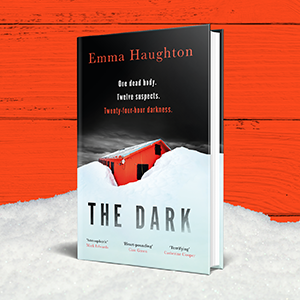
The Dark by Emma Haughton
ONE DEAD BODY
TWELVE SUSPECTS
TWENTY-FOUR-HOUR DARKNESS
In the most inhospitable environment – cut off from the rest of the world – there’s a killer on the loose.
A&E doctor Kate North has been knocked out of her orbit by a personal tragedy. So when she’s offered the chance to be an emergency replacement at the UN research station in Antarctica, she jumps at the chance. The previous doctor, Jean-Luc, died in a tragic accident while out on the ice.
The move seems an ideal solution for Kate: no one knows about her past; no one is checking up on her. But as total darkness descends for the winter, she begins to suspect that Jean-Luc’s death wasn’t accidental at all. And the more questions she asks, the more dangerous it becomes for them all . .

My Review
Not always believable but always entertaining, The Dark is all a bit Agatha Christie with snow and ice. Except Dr Kate North is no Miss Marple. She’d be a rubbish detective and while us Pigeons (book club) were often screaming at the page at her ineptitude, plus her addiction to painkillers and tranquillisers (how did she get the job?), by the end we all grew to love her (maybe ‘love’ is a bit strong).
But don’t let any of that put you off. It’s a brilliant roller-coaster (or in this case more of a tobogganing runway) of a ride (apologies for the cliche), never knowing who is telling the truth, who was murdered or even if, the picture ever-changing. Some of us guessed towards the end, but we still weren’t sure.
The main ‘character’, however is not Kate, but the setting. Pitch dark once winter has set in, freezing cold and claustrophobic, in spite of the miles of frozen space outside, it’s amazing that anyone would want to live here cooped up with 12 other people for months on end. Even more so when one of them could be a killer. We never really understand exactly what they are doing there – some kind of research programme I guess.
I read this in daily ‘staves’ with The Pigeonhole and couldn’t wait for the next one to be released. If I had the whole book, I think I would have read it in one go. Preferably with a mug of hot chocolate and a very warm blanket. Brrr.
If I had any criticism at all it would be that there are too many characters to flesh them all out sufficiently, which meant we couldn’t work out the possible motive any one of them might have.
Many thanks to The Pigeonhole and my fellow Pigeons for making this such an enjoyable read.
About the Author
Emma grew up in Sussex; after a stint au pairing in Paris and a couple of half-hearted attempts to backpack across Europe, she studied English at Oxford University then trained in journalism. During her career as a journalist, she wrote many articles for national newspapers, including regular pieces for the Times Travel section.
Following publication of her picture book, Rainy Day, Emma wrote three YA novels. Her first, Now You See Me, was an Amazon bestseller and nominated for the Carnegie and Amazing Book Awards. Better Left Buried, her second, was one of the best YA reads for 2015 in the Sunday Express. Her third YA novel, Cruel Heart Broken, was picked by The Bookseller as a top YA read for July 2016.

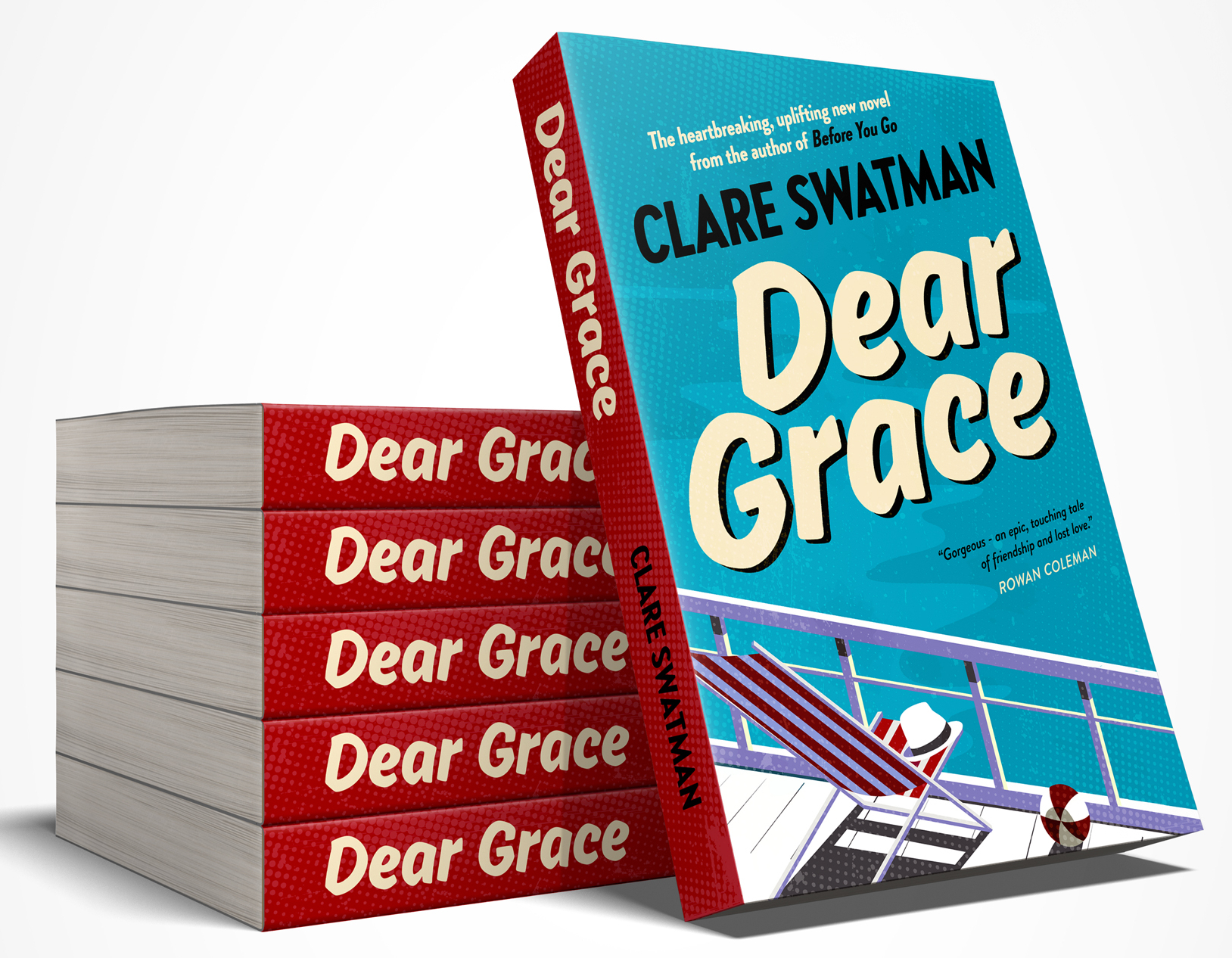
The most unlikely friendship. The most unexpected consequences.
When Anna’s husband cheats on her, she’s sure she’ll never be happy again. But then she meets 94-year-old Grace. Despite an age gap of more than fifty years, the pair set out together on a life-changing journey halfway across the country in search of some answers.
#DearGrace @clareswatman @annecater @RandomTTours #RandomThingsTours

Sometimes the only way to move on is to revisit the past. But will Anna and Grace be prepared for what they find?
A story about love, female friendship, heartbreak and learning to forgive.

My Review
There are three central characters in this heartfelt, uplifting book. First of all we have Anna, a 39-year-old carer, whose husband cheated on her and left her feeling bereft and unable to trust anyone with whom she might form a future relationship. Then there is 94-year-old Grace, who Anna is looking after. Jilted at the altar over 70 years ago by Arthur, after he returned from the war, Grace found happiness with ‘her Roy’, a lovely man who took care of her and only recently passed away.
Grace has outlived her peers and her friends, but she is particularly close to her great-nephew Tom, grandson of her brother Ernest. Tom visits two or three times a week and tends her beloved garden. Tom is kind and handsome (he would have to be, wouldn’t he), and soon Grace is hatching a plot – she does that a lot – but neither party is up for it.
Grace is a wonderfully written character. She truly melts our hearts and soon Anna becomes both her friend and confidante. A strange pairing with over 50 years between them, but age is no barrier to friendship, and what starts out as a job becomes a close bond with trips to the cafe and the beach, and ends with a trip of a lifetime.
This is such an uplifting tale, though the sadness and heartbreak faced by Grace in her younger years and now, will have you in tears. Anna’s story made me more angry than sad. She obviously married an idiot who didn’t appreciate her, but will she be able to put it behind her and find love and romance? You’ll have to read this fabulous book to find out.
Many thanks to @annecater for inviting me to be part of #RandomThingsTours.
About the Author
Clare Swatman is an author and journalist. She has had two previous novels published, with her debut, Before You Go, selling in 22 territories around the world. She has also spent 20 years writing for women’s magazines in the UK.
Her latest novel, Dear Grace, is inspired by her love of Lowestoft, the town where she spent many happy holidays with her late grandparents.
Clare lives in Hertfordshire in the UK with her husband and two boys. Even the cat is male, which means she’s destined to be outnumbered forever.

Facebook at Clare Swatman Author, Insta @clareswatmanauthor, and twitter, where she’s @clareswatman
The Gathering Storm: Book 1 in the Sturmtaucher Trilogy, a powerful and compelling story of two families torn apart by evil.
‘Kiel, Northern Germany, 1933. A naval city, the base for the German Baltic fleet, and the centre for German sailing, the venue for the upcoming Olympic regatta in 1936.
#TheGatheringStorm #SturmtaucherTrilogy @alanjonesbooks @annecater @RandomTTours #RandomThingsTours

The Kästners, a prominent Military family, are part of the fabric of the city, and its social, naval and yachting circles. The Nussbaums are the second generation of their family to be in service with the Kästners as domestic staff, but the two households have a closer bond than most.
As Adolf Hitler and his National Socialist Party claw their way to power in 1933, life has never looked better for families like the Kästners. There is only one problem. The Nussbaums are Jews.
The Sturmtaucher Trilogy documents the devastating effect on both families of the Nazis’ hateful ideology and the insidious erosion of the rights of Germany’s Jews.
When Germany descends ever deeper into dictatorship, General Erich Kästner tries desperately to protect his employees, and to spirit them to safety.
As the country tears itself apart, the darkness which envelops a nation threatens not only to destroy two families, but to plunge an entire continent into war.’

My Review
Firstly I need to say that I was worried about the effect reading this book would have on me, as I knew it would be personal. My mother was Jewish, born in Bucharest and from the age of 12 living in Vienna. Her family knew about the prejudice and discrimination towards Jews, but were able to get out in 1938, the only incident of note being tear-gassed in an opera house in Vienna. Once in London they were evacuated to Cheltenham, where they remained throughout the war and beyond.
I was not prepared however, for Hitler’s invasion of Poland, the massacre of the Jews, the establishment of ghettos and the carving up of the country with parts of it going to Russia. My father was a Polish Catholic, so while not affected by the treatment of the Jews, he joined the army at 16 and was captured by the Soviets and sent to freeze in a prisoner-of-war camp in Northern Russia.
But enough about me. This book is staggeringly brilliant, the work, the research, the emotions it invokes and the horror. There were times when I gasped at what was perpetrated against not just the Jews, but also the Roma, disabled people, homosexuals and anyone who did not make up the perfect Aryan race. This included the rape and murder of young Jewish girls by drunken SS soldiers (one incident of which will stay in my head for a long time to come) and the burning of the synagogue in Warsaw, killing 200 Jews praying inside. I knew these things happened but it is described here in such terrifying detail, yet without embellishment or glorification. It doesn’t require any. It’s not Hollywood. It’s horror in its own right, a perfect example man’s inhumanity to man.
The story itself is told from the point of view of two families who live in Kiel. General Erich Kästner and his wife Maria and their four children Franz, Johann, Eva and Antje, and the Nussbaums, who are Jews and have worked for the Kästners for many years. Yosef, Erich’s driver, his wife Miriam and their two children, Ruth and Manny, are great friends with their employers. Ruth and Antje in particular, are the best of pals.
But as Hitler and his cohorts – Himmler, Goebbels, Heydrich, Goering and Hess, amongst others, develop their plans to remove all non-Aryans from Germany, while invading and annexing Czechoslovakia, the Sudetenland and Poland, life for the Jews becomes harder and harder as they lose their rights, their jobs, their homes and their savings. It is not so bad for the Nussbaums, living with the Kästners, but how long can it last? As their friends escape to Palestine or attempt to go to America or the UK, the Nussbaums prefer to stay put for the moment.
Apart from the main historical figures as mentioned above (whose involvement in the book is factual and forms the background of the fictional story), the only one who is real is Admiral Wilhelm Canaris. We learn a lot about Hitler’s plans and the time-line starting in 1933, through his dated memos to Erich Kästner, as well as newspaper reports in the Kiel Morgenpost. This is a very clever plot device as it seamlessly weaves the facts into the fiction.
You can read about Canaris here: “Wilhelm Franz Canaris was a German admiral and chief of the Abwehr, the German military intelligence service, from 1935 to 1944. He was initially a supporter of Adolf Hitler but by 1939 had turned against the regime.” Source: Wikipedia
In 1945 Canaris was taken to Flossenbürg concentration camp, where he was publicly humiliated and executed for high treason. By this time the war was almost over.
But of everything I read in this wonderful book, I probably found this passage amongst the most upsetting:
28/09/1939 Memo from Wilhelm Canaris to Erich Kästner – “The Fuhrer has signed an authorisation…. that exonerates the Reich’s physicians from prosecution in relation to euthanasia of German citizens living in institutions with mental and physical disabilities whom the physicians deem incurable and thus unworthy of life.”
Many thanks to @annecater for inviting me to be part of #RandomThingsTours.
About the Author
Alan Jones is a Scottish author with three gritty crime stories to his name, the first two set in Glasgow, the third one based in London. He has now switched genres, and his WW2 trilogy will be published in August 2021. It is a Holocaust story set in Northern Germany.
He is married with four grown up children and four wonderful grandchildren.
He has recently retired as a mixed-practice vet in a small Scottish coastal town in Ayrshire and is one of the RNLI volunteer coxswains on the local lifeboat. He makes furniture in his spare time, and maintains and sails a 45-year-old yacht in the Irish Sea and on the beautiful west coast of Scotland. He loves reading, watching films and cooking. He still plays football despite being just the wrong side of sixty.
His crime novels are not for the faint-hearted, with some strong language, violence, and various degrees of sexual content. The first two books also contain a fair smattering of Glasgow slang.
He is one of the few self-published authors to be given a panel at Bloody Scotland and has done two pop-up book launches at the festival in Stirling.
He has spent the last five years researching and writing The Sturmtaucher Trilogy.

Q & A
What made you switch genres from gritty crime thrillers to a WW2 trilogy?
A story, or the kernel of one, wormed its way into my mind just as I was finishing my last book, ‘Bloq‘. I should probably have written a few more crime novels on the back of the relative success that Bloq had, but I couldn’t get the story or the characters out of my mind. I’d read a fair bit of historical fiction over the years, but I re-read a few of them, and picked up one of the most successful historical fiction books of all time, The Pillars of the Earth, by Ken Follet, just to get a perspective on the amount of history, and detail, and how many characters went into a book like that. It confirmed what I’d thought – the detail was astounding but it had to be seen through the characters’ eyes, and the characters had to have enough depth and be real enough for the reader to care.
What inspired you to write about the plight of the Jews in Nazi Germany? Were you inspired by other writers or films you have seen or by real events?
I’ve been fascinated and horrified by the Holocaust since reading Diary of a Young Girl by Anne Frank at around ten or eleven years of age. I’ve read widely about it since, both novels and non-fiction, and watched countless films and documentaries about that most terrible time in history, thinking that I knew enough about it, without knowing every detail. I was wrong.
How much research did you have to do?
I did about a year’s research initially, which included a trip to Germany, and to Denmark, just to see the locations I’d chosen for the books for myself. During this time I was also setting out an outline for what was to one book. As I got deeper into my research, I realised that there was so much more to the Holocaust than I’d thought possible, and as I added events that my characters would have lived through, it quickly became evident that one book wouldn’t be enough. Even during the writing process, I found that a great deal of what I call micro-research was needed for each paragraph, and sometimes each sentence or even each word, and I found myself spending half a day looking for evidence or corroboration to back up some fact or other that I wanted to put into the books.
How many of the characters are fictional and how many are actual historical figures?
All the main characters, except for Wilhelm Canaris, are fictional. Most of the political leaders, the NSDAP Hierarchy and senior military figures are real. In between, there is a mish-mash of real characters, fictional ones, and some who are fictional but loosely based on real people. I included a few notable Kiel citizens who made the newspapers of the day – Dr. Friedrich Schumm, Wilhelm Spiegel and Otto Eggerstedt, as they fitted in with the story and with my fictional characters, and I felt that their stories deserved to be told; they were truly brave men. The Gestapo chief towards the end of the war, and a few other senior Gestapo figures were also real, and again they fitted the storyline to perfection.
How important is setting in your books?
Massively so. When the inspiration about the book first came to me, sailing played an important part in the story. When I researched Germany for popular sailing venues, there were some inland lakes that might have been suitable, but when I found out that Kiel was not only the centre for German sailing and the venue of the infamous 1936 Olympic games, but that it was also the most important German Naval base, I knew I’d found the location for my book. The first book largely takes place in and around Kiel, with small cameos in Hamburg, Hanover and Berlin. Once the war begins in 1939, the book follows the path of the German invasion of Poland. There are a number of locations elsewhere in the second and third books, but don’t want to give away any spoilers…
What is your typical day as a writer? Has Covid had an impact on this?
While I was working, I would spend on average five hours a day researching, writing or editing, getting up around 5 – 6 am, getting in a few hours before work, then cramming in an hour or two later in the day. Extra hours at the weekend would make up for any shortfall during the week. I retired from being a vet in December last year which has allowed me to work 10-12 hours a day on the books, mainly editing, but also doing the cover and the trailer video, plus all the promotion and marketing stuff that goes with self-publishing.
Do you listen to music while you write? Or do you prefer total silence?
I usually write in silence – this is a change for me, as I always used to have background music on. I don’t know why it changed.
What sort of books did you read as a child and what is your favourite book ever (as an adult or child)?
I was brought up in a very religious household, and we had no television set, so I filled my time with reading. I read everything as a child from Asterix to Enid Blyton, from Roald Dahl to Robert Louis Stevenson. My favourite kids book was Stig of the Dump, I think, but I moved on to adult books such as Alistair Mclean, Nevile Shute, Nicholas Monsorrat and Hammond Innes at quite an early age. As an adult, I find it impossible to choose a favourite, to be honest, as I read quite a wide range of genres. It would be between Mila 18 by Leon Uris, Shogun by James Clavell, and Trainspotting by Irvine Welsh.
What do you consider your greatest achievement?
Being a vet, and a father and a grandfather are all up there, and I became an RNLI coxswain on our local lifeboat a few years ago – I joined fairly late in my life, and that is also in close contention, but I think writing and publishing the Sturmtaucher trilogy will trump everything as my greatest achievement.


 Bookchatter@Cookiebiscuit